
Charleston notes
Updated 3 sources
Two commercial settings in one city
A store on a West Ashley retail road is a different lock job from a shop in a historic district. West Ashley's growth in the 1970s and 1980s brought businesses along with homes, and major retailers chose it over the historic peninsula, where the big lots a big-box store needs were not available. Savannah Highway, Sam Rittenberg Boulevard and Ashley River Road are examples. A store of that size may have several kinds of entry, each with its own hardware: glass storefront doors, steel service doors and a loading door.
Inside a historic district, exterior work on a shop or office that can be seen from the public right-of-way goes to the Board of Architectural Review, while city staff typically handle minor items such as painting, signage and repairs. A new street-facing door is a visible change, so ask staff before ordering one. New hardware that alters how the entrance looks from the sidewalk deserves the same question; rekeying works inside the existing lock.
Hurricane panels over shop doors
A 2006 Board of Architectural Review policy limits hurricane panels in the Old and Historic and Old City districts to the run-up to a storm; they must be down within 14 days after the threat passes. Permanent anchors have to sit recessed and flush with the trim, with no tracks or raised bolts. A business can plan for that by choosing ahead which door staff will use while the rest are covered, and making sure everyone who opens up has its key. This is general information, not legal advice.
Keys, staff and tenants
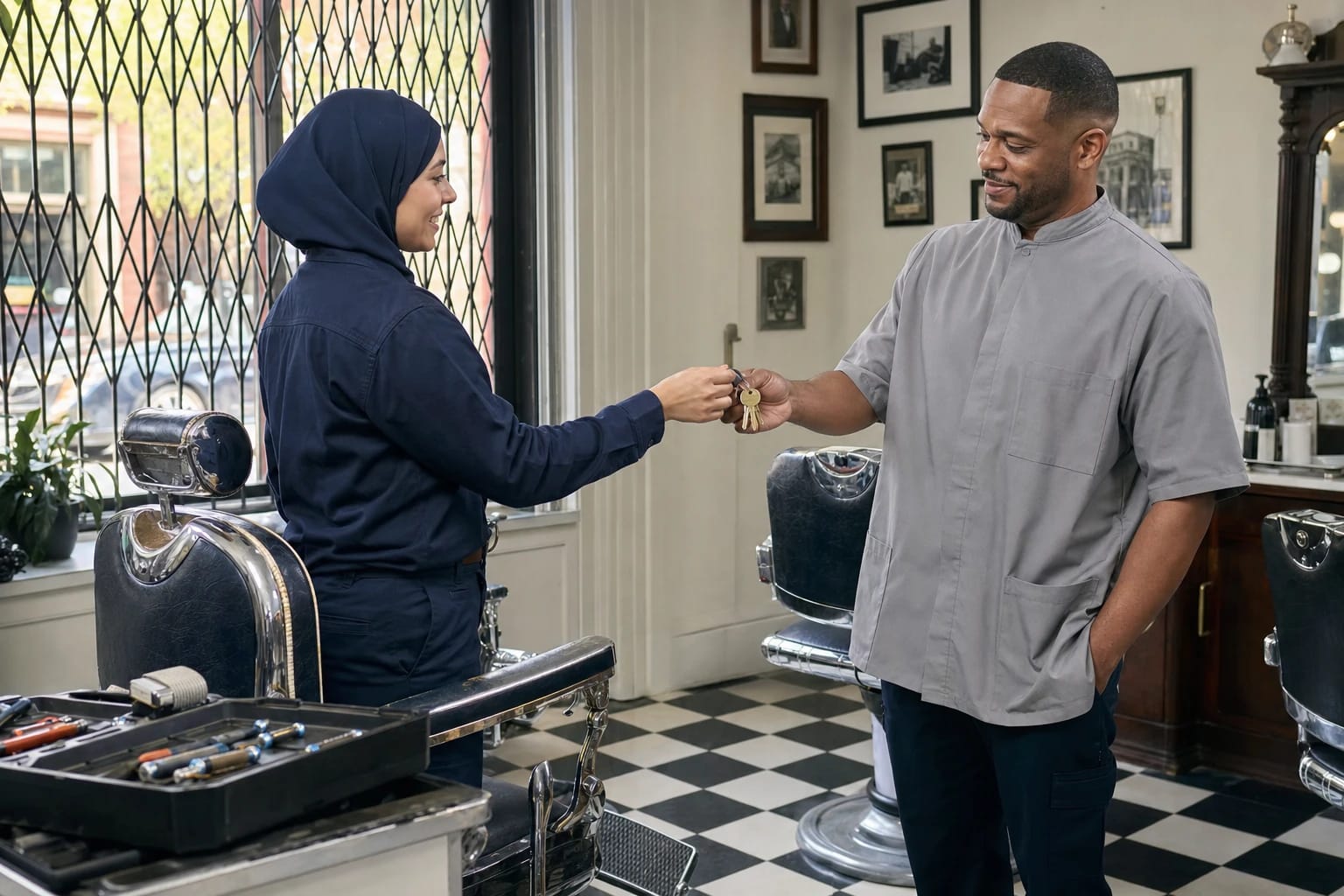
Every departing employee who kept a copy is a reason to rekey. A master key system lets a manager open every door while each staff key opens only the doors that person needs, and a restricted keyway limits who can copy keys. When a tenant leaves a retail unit or a shop changes hands, the new occupant cannot know who still holds a key. A current key log makes those changes easier to sort out.
In a request, name the street or corridor, the door types, how many keys are out and whether a master system already exists. See commercial locksmith, lock rekeying and the Charleston page.
Business premises
What commercial locksmith covers
Lock and key work for offices, storefronts, and other business premises, from rekeying and repairs to hardware upgrades.
- Rekeying locks after staff or tenant changes
- Repair and replacement of commercial-grade locks and cylinders
- Lockout help for business premises
ID and proof you may access the property are checked before any work.
Commercial Locksmith in South CarolinaSources
Public records and references this page draws on. They are outside USA Locksmith Pros and open in a new tab.
- West Ashley, South Carolina (Wikipedia)en.wikipedia.org (external site, opens in a new tab)
- City of Charleston, Board of Architectural Review (BAR-L and BAR-S)charleston-sc.gov (external site, opens in a new tab)
- City of Charleston, BAR Policy Statement for Hurricane Protection Panelscharleston-sc.gov (external site, opens in a new tab)