
Chicago notes
Updated 6 sources
A city where keys change hands
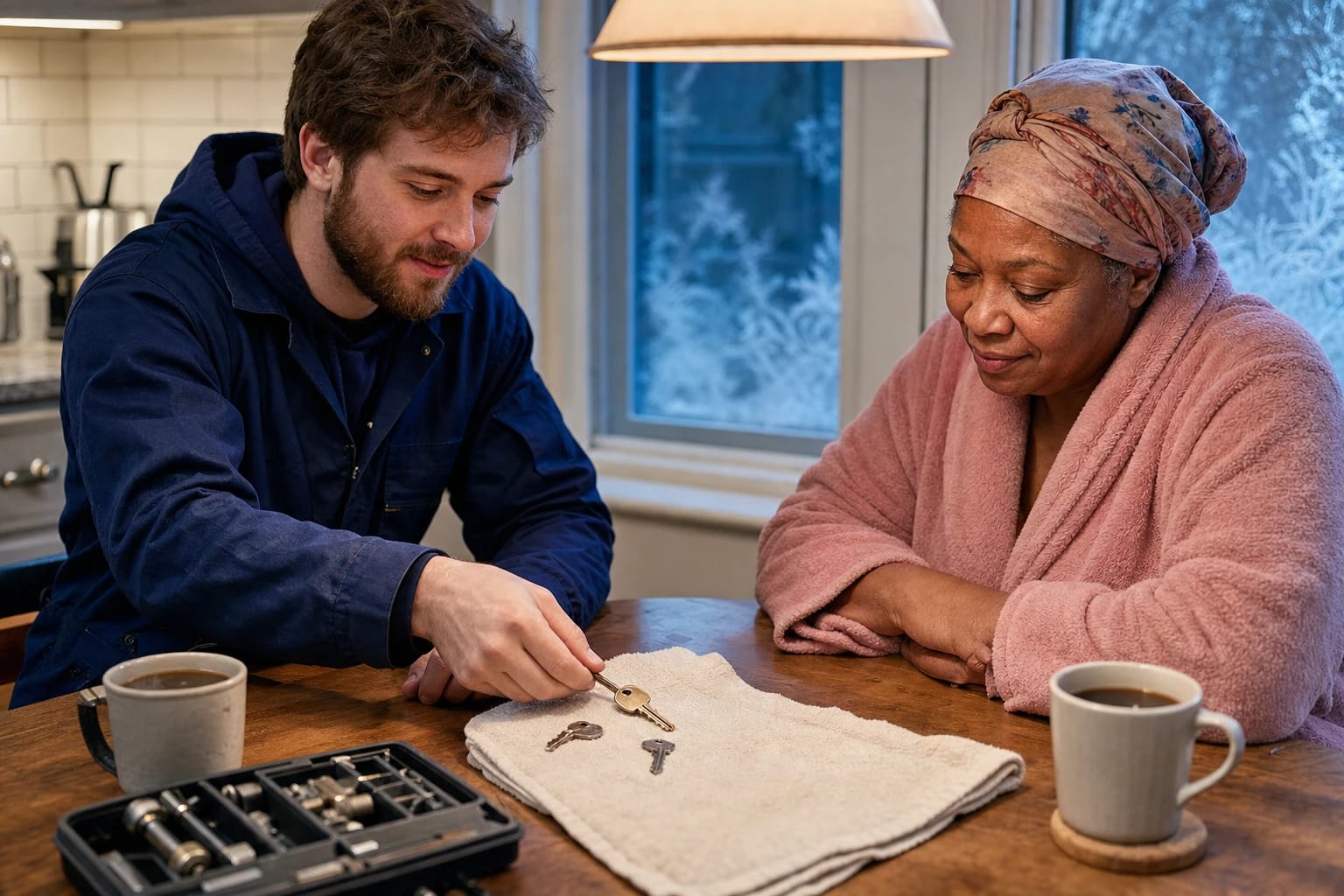
Census estimates put renters at 53.5 percent of Chicago's occupied homes, so a great many doors pass from one household to the next. Rekeying resets the pins inside an existing cylinder so every old key stops working, while the lock body, trim and door stay in place. New owners often rekey after closing, because nobody can count the copies held by past owners, tenants and contractors. Landlords often rekey between tenancies. If a plug no longer grips or the housing is cracked, the job becomes lock replacement instead.
One street door, two or three flats
Many greystones, including those in Lake View and North Lawndale, are divided into two or three flats. Where a single street door serves every flat, a move-out can touch two locks: the departing household's unit door and the shared street door. Decide whether the street door is rekeyed too, and order enough new keys for every flat that uses it.
What Chicago and Illinois rules say
- Tenants changing locks. The city's 2023 ordinance summary advises tenants not to change their locks without telling the landlord, except in emergencies, and to give the landlord a key if they do. Where the Residential Landlord and Tenant Ordinance applies (it excludes owner-occupied buildings with six or fewer units), landlords get reasonable access on two days' notice under Municipal Code 5-12-050.
- Landlords. A landlord may not change a sitting tenant's locks; Municipal Code 5-12-160 treats that as a lockout, along with removing doors.
- Safe Homes Act, 765 ILCS 750/20. A tenant who reasonably believes a tenant or household member faces a credible imminent threat of domestic or sexual violence at the home can ask in writing for new locks, with the evidence the law requires. The landlord then has 48 hours to change them or let the tenant do it.
This is general information, not legal advice.
Listing the cylinders
- Each cylinder: unit deadbolt, knob or lever, back door, street door, and any basement or storage door.
- Whether they should all work on one key, and how many copies each household needs.
- For a rental, whether the lease requires the landlord to hold a key.
For how the work is done, see lock rekeying; for local housing notes, see Chicago.
At the door
What lock rekeying covers
Changing the pins inside your existing locks so old keys stop working, without replacing the hardware.
- An inspection of each lock to confirm it can be rekeyed
- Re-pinning each cylinder to work with a new key
- New keys cut for the rekeyed locks
ID and proof you may access the property are checked before any work.
Lock Rekeying in IllinoisSources
Public records and references this page draws on. They are outside USA Locksmith Pros and open in a new tab.
- U.S. Census Bureau ACS 2024 1-year via Census Reporter, Year built, units in structure and tenure (B25034, B25024, B25003)api.censusreporter.org (external site, opens in a new tab)
- Greystone (architecture), Wikipediaen.wikipedia.org (external site, opens in a new tab)
- City of Chicago: RLTO Summary (2023)chicago.gov (external site, opens in a new tab)
- City of Chicago, Residential Landlord and Tenant Ordinance summarychicago.gov (external site, opens in a new tab)
- City of Chicago Department of Housing: Experiencing a Lockout?chicago.gov (external site, opens in a new tab)
- Illinois General Assembly, Safe Homes Act 765 ILCS 750/20, Change of locksftp.ilga.gov (external site, opens in a new tab)