
Newark notes
Updated 3 sources
What the seasons do to a Newark lock
NOAA's state climate summary describes moderately cold, occasionally snowy winters and warm, humid summers. An exterior lock in Newark lives through both.
- Winter. Snowmelt and rain run into a keyway by day and can turn to ice overnight, so the key turns stiffly or not at all in the morning. As metal contracts, a latch that barely caught in the fall can miss its strike in January.
- Summer. Humidity swells wood doors and frames. A deadbolt that has to be pushed, lifted or pulled into place is rubbing on its strike, which wears the bolt and the cylinder over time.
- Storms. Wind-driven rain on an exposed door speeds rust on hinges and strikes.
Shared front doors and older hardware
In an Ironbound two- or three-family house, one front door serves every household, so it is opened and closed far more than a single-family door. Wear shows up as a latch that no longer catches, a strike worked loose from the frame, or a cylinder worn smooth by many keys. If you rent, report a shared door that will not latch to the owner, since it leaves every unit's hallway open.
Forest Hill has hundreds of stately homes from the 1870s to the 1920s. Where a door there still carries its original hardware, tired springs, a loose knob spindle or a sticking latch in an old mortise lock can often be put right, which spares the door from being cut for a new lock style.
Upkeep between visits
- Before winter, use a dry graphite or PTFE lubricant in the keyway; oil holds grit and thickens in the cold.
- Never force a key in a frozen lock. A key snapped in the cylinder turns a repair into a broken key extraction.
- If you have to lean on the door to lock it, have the strike adjusted before the bolt wears.
When you ask for a repair, say what the lock does wrong and when (cold mornings, humid afternoons, after rain), with photos of the lock and the door edge. More background is on the lock repair and Newark pages.
At the door
What lock repair covers
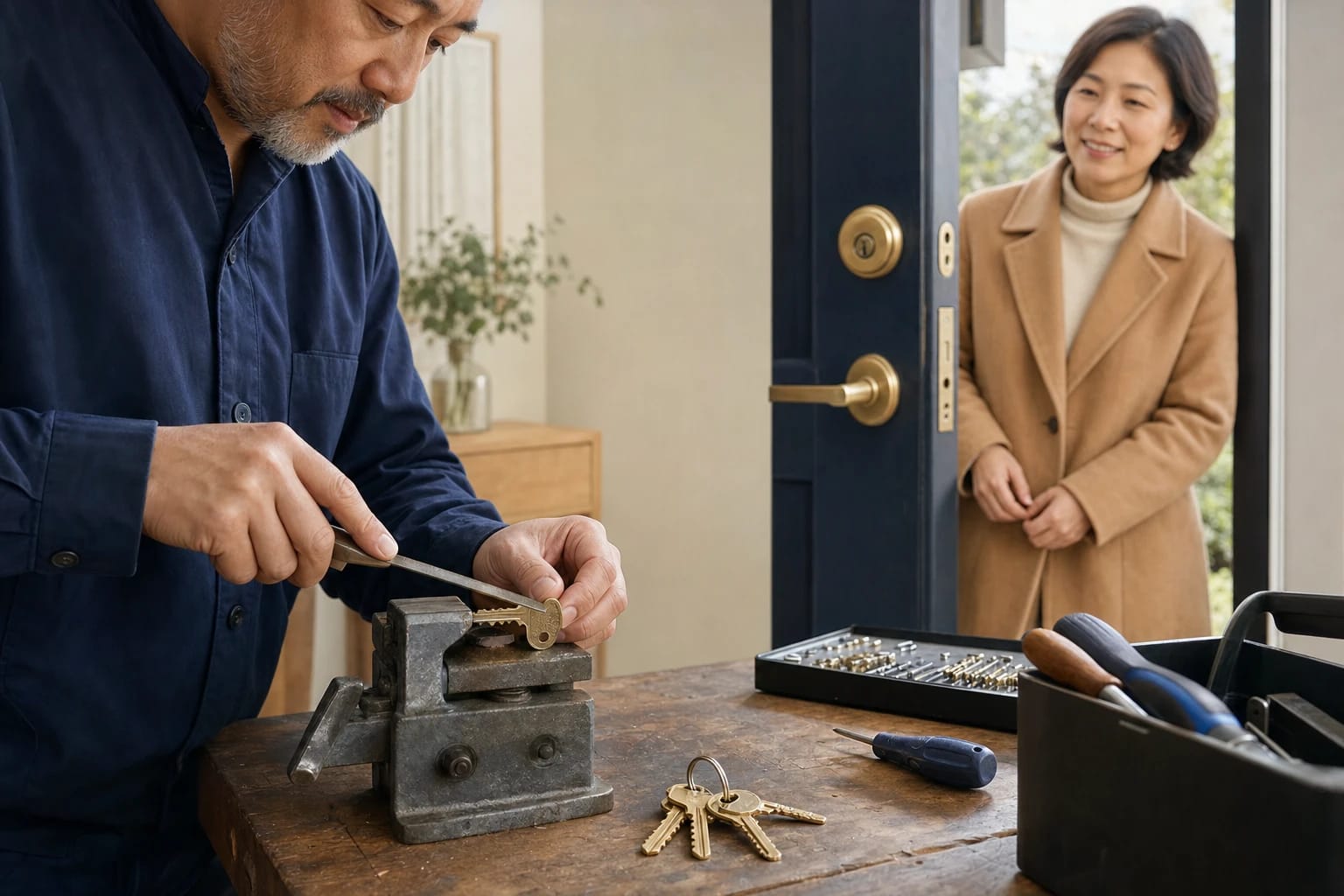
Diagnosing and fixing locks that stick, turn stiffly, will not latch, or have loose or misaligned parts.
- Diagnosing why the lock is sticking, binding, or failing to latch
- Cleaning and lubricating the lock mechanism where appropriate
- Adjusting or realigning the strike plate and latch
ID and proof you may access the property are checked before any work.
Lock Repair in New JerseySources
Public records and references this page draws on. They are outside USA Locksmith Pros and open in a new tab.