
Houston notes
Updated 4 sources
Why keys pile up in Houston
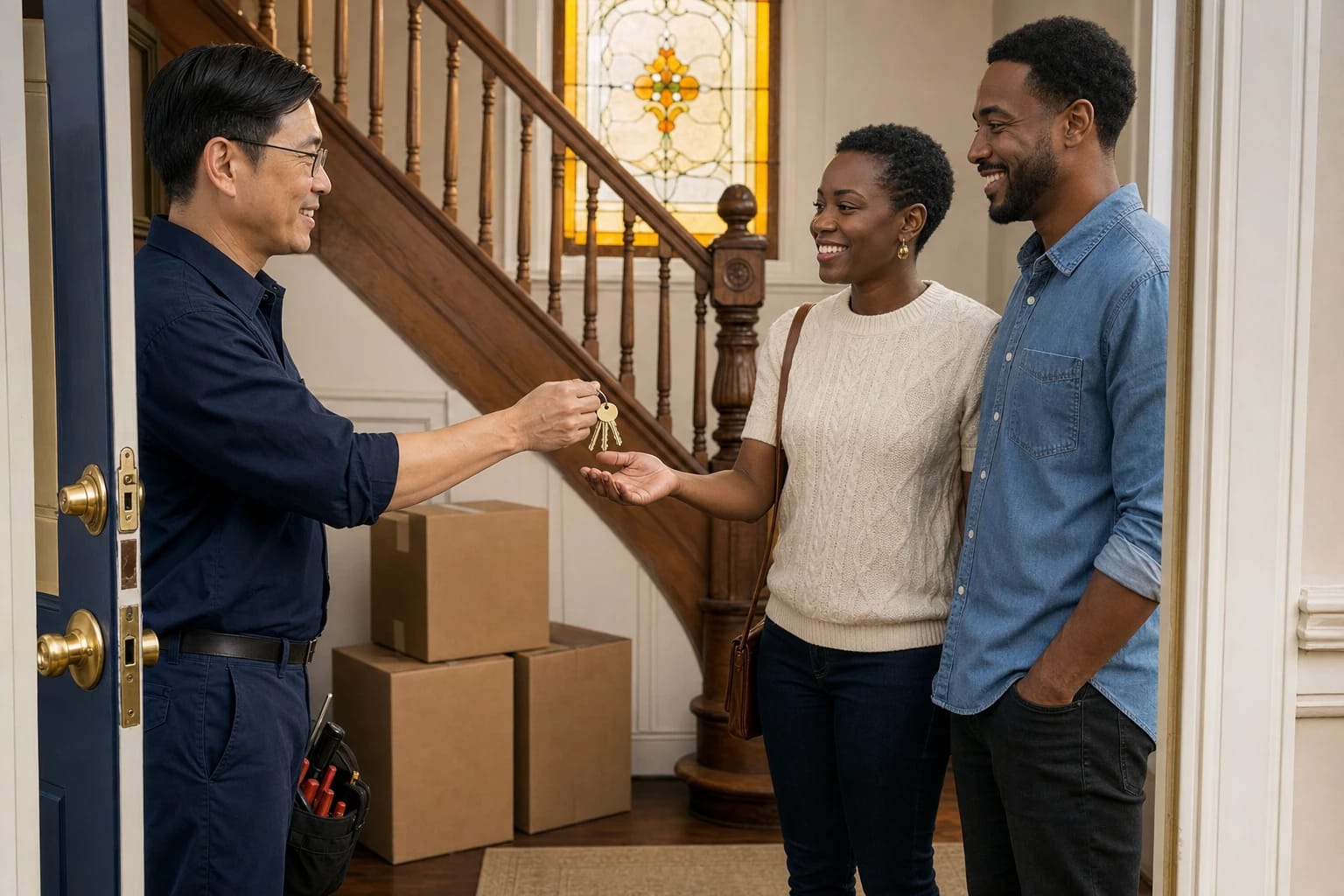
Rekeying changes the pins inside a lock cylinder so the old keys stop working and a new key takes over. In Houston, Census Bureau estimates for 2024 count 59.1 percent of occupied homes as rented, well above the 37.7 percent Texas figure. Every move-out can leave a working key with a former tenant, a roommate or a moving crew.
Rental rules under the Texas Property Code
Houston rentals fall under Subchapter D of Chapter 92, which section 92.152 applies to rented houses, duplexes, mobile homes, apartments, condos and townhomes, though not hotel rooms.
- Turnover deadline. Under section 92.156, the landlord pays to rekey no later than the seventh day after each tenant turnover date, and must rekey again, at the tenant's expense, whenever the tenant asks.
- Which doors. The duty excludes closet and other interior doors (section 92.156(d)). Section 92.151 treats the door between a living area and a garage as an exterior door.
- Tenants ask first. Section 92.163 bars a tenant from rekeying or altering a security device without the landlord's permission, apart from repair-and-deduct remedies.
This is general information, not legal advice.
Buyers and long-held houses
Those turnover rules protect tenants, not buyers. A house in Glenbrook Valley, built between 1953 and 1962, may have passed through several owners, contractors and house-sitters, and a seller often cannot say how many copies of its keys exist. Rekeying every exterior door after closing settles the question, and the doors can be keyed alike so one key opens all of them.
Glenbrook Valley is a city historic district, where Chapter 33, Article VII of the Houston Code of Ordinances can require a Certificate of Appropriateness to change an exterior feature. Rekeying works inside the existing lock and leaves the door's exterior unchanged. A cylinder that is worn, damaged or not made to be rekeyed calls for lock replacement instead.
Details to put in a rekeying request
- how many exterior doors and locks there are, counting the garage entry door
- any brand name on the key head or lock face
- whether you want the locks keyed alike
- whether you own the home, manage it, or rent with the landlord's written permission
- for landlords, the turnover date
The lock rekeying page describes the service; Houston has the city notes.
At the door
What lock rekeying covers
Changing the pins inside your existing locks so old keys stop working, without replacing the hardware.
- An inspection of each lock to confirm it can be rekeyed
- Re-pinning each cylinder to work with a new key
- New keys cut for the rekeyed locks
ID and proof you may access the property are checked before any work.
Lock Rekeying in TexasSources
Public records and references this page draws on. They are outside USA Locksmith Pros and open in a new tab.
- U.S. Census Bureau ACS 2024 1-year via Census Reporter, Year structure built, units in structure and tenure (B25034, B25024, B25003)api.censusreporter.org (external site, opens in a new tab)
- Texas Property Code Chapter 92, Residential Tenancies (Texas Legislative Council)tcss.legis.texas.gov (external site, opens in a new tab)
- City of Houston Planning: Certificates of Appropriatenesshoustontx.gov (external site, opens in a new tab)
- Glenbrook Valley, Houston, Wikipediaen.wikipedia.org (external site, opens in a new tab)