
Springfield notes
Updated 3 sources
How the weather wears on Springfield locks
An exterior door in Springfield takes winter cold and heavy rain, and NOAA's Illinois climate summary notes that 2-inch extreme precipitation events have run above average since 1990. Water is behind much of the trouble:
- Rain and melting snow run into the keyway. When that water turns to ice overnight, the pins stick and the key will not turn. Use lock de-icer and never force it.
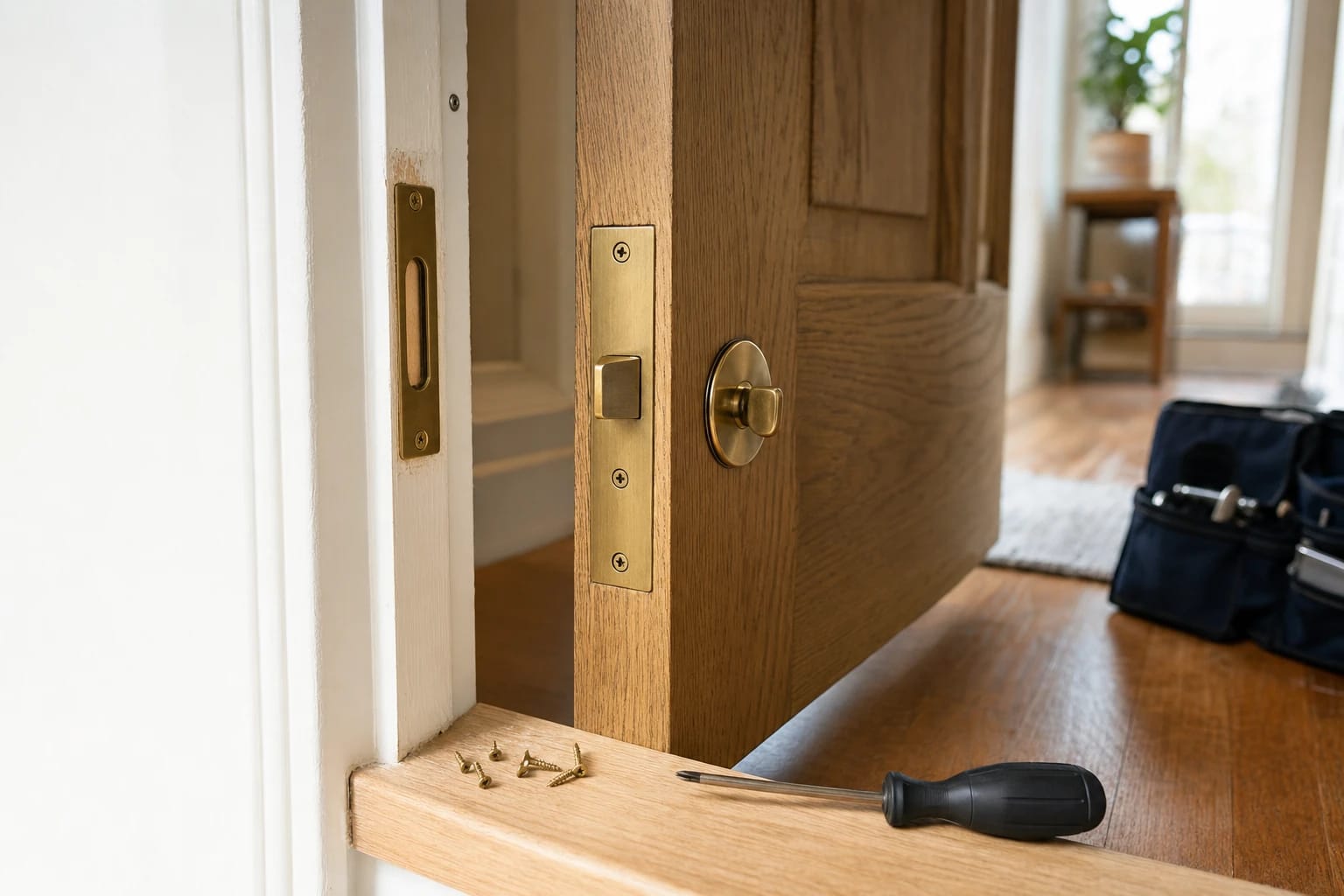
- Wood doors swell in wet months and shrink in cold, dry ones, so a bolt can scrape the strike plate for part of the year and move smoothly the rest. That is often a door-fit problem rather than a lock problem, and adjusting the strike plate can fix it.
Older hardware worth keeping
Census Bureau figures put 17.5 percent of Springfield's homes in buildings from before 1940. Old locks tend to wear at the same points: a loose knob spindle, a tired latch spring, a cylinder whose pins have worn down along with its key. Many can be repaired, and an original lock that fits an old door is often worth saving over a replacement that means cutting the door.
Downtown, the Historic Sites Commission's design guidelines lean the same way. They ask for every effort to repair an original storefront door and want aluminum storefronts from the 1940s to the 1960s kept, along with period details such as 1950s-style door hardware. On those doors, repair keeps the original hardware in place.
Simple upkeep
- Once a year, use a lubricant made for locks, such as dry graphite, rather than household oil that collects grit.
- Tighten loose strike plate and hinge screws; a sagging door strains the bolt.
- Before the first hard frost, check that every exterior lock turns smoothly.
- If a key is bent or cracked, have a new one cut before it snaps; a snapped key calls for broken key extraction.
Describing the problem
Say what the lock does (sticks, spins, will not latch), when it started (after ice, after rain, after the door was painted), and what kind of door it is on. If a part is no longer made, lock replacement may be the fallback.
At the door
What lock repair covers
Diagnosing and fixing locks that stick, turn stiffly, will not latch, or have loose or misaligned parts.
- Diagnosing why the lock is sticking, binding, or failing to latch
- Cleaning and lubricating the lock mechanism where appropriate
- Adjusting or realigning the strike plate and latch
ID and proof you may access the property are checked before any work.
Lock Repair in IllinoisSources
Public records and references this page draws on. They are outside USA Locksmith Pros and open in a new tab.
- NOAA NCICS State Climate Summaries, Illinoisstatesummaries.ncics.org (external site, opens in a new tab)
- U.S. Census Bureau ACS 2024 1-year via Census Reporter, Year built, units in structure and tenure (B25034, B25024, B25003)api.censusreporter.org (external site, opens in a new tab)
- City of Springfield Historic Sites Commission, Design Guidelines for Building Restoration and Reconstruction in Historic Areas (2008)springfield.il.us (external site, opens in a new tab)