
Greenville notes
Updated 5 sources
Houses from the 1910s to the 1930s
Three of Greenville's historic districts date to the same stretch. Pettigru, the largest, has 88 structures, most of them frame and brick buildings from 1910 to 1930. Overbrook took shape once the trolley reached the city's outskirts in 1910, was fully developed by 1924, and has Craftsman bungalows across its first section. East Park Avenue, subdivided around 1910, was built up mostly from 1920 through the 1930s, in Craftsman, American Foursquare, Tudor and Neo-Classical styles.
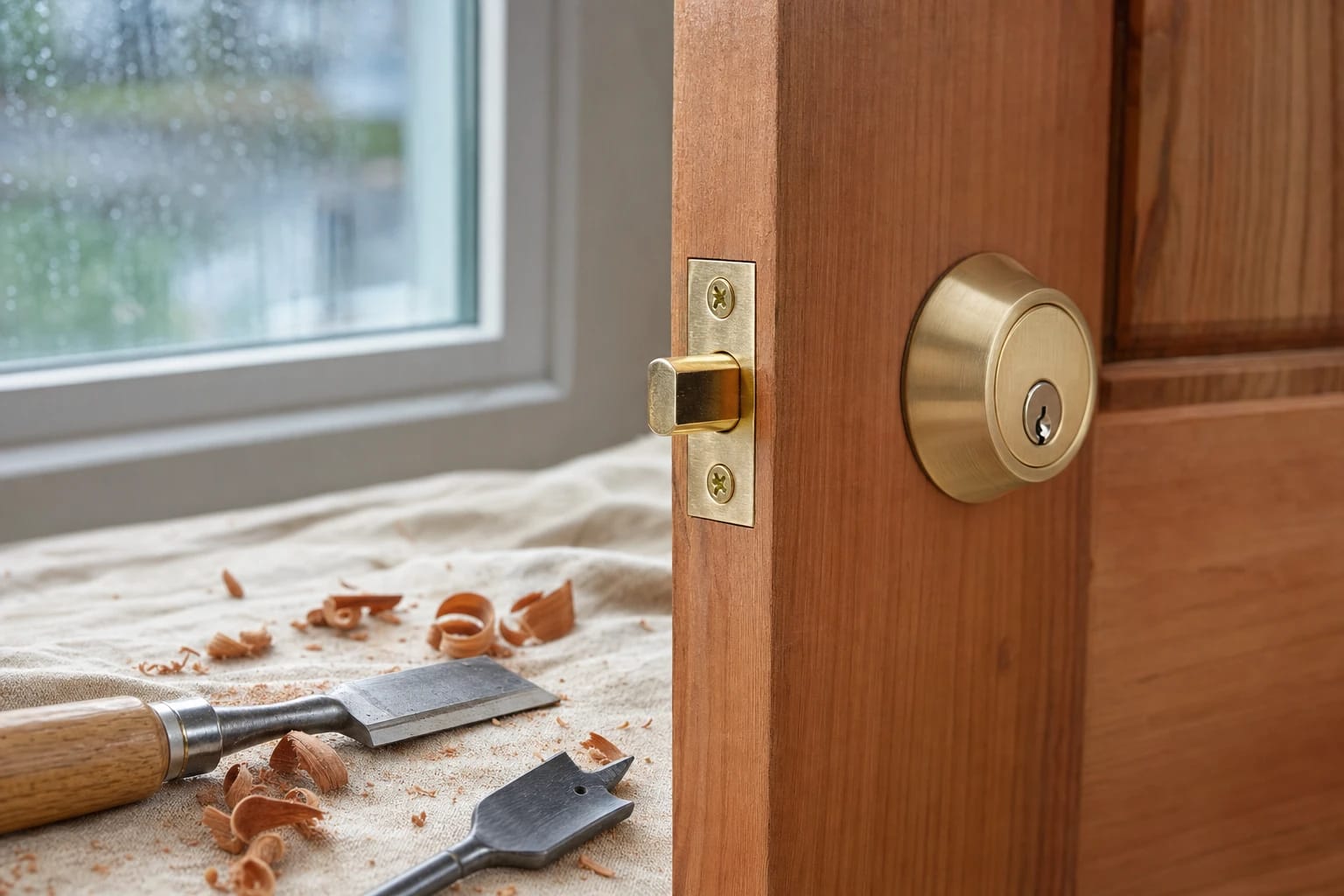
Doors of that age may hold a mortise lock, a surface-mounted rim lock, or a deadbolt added decades later into wood that has been drilled more than once. Replacing a lock there is usually about fitting new hardware to an old door: filling or covering earlier holes, matching the backset, and keeping a door that still closes well.
What the preservation guidelines say
The city's Design Guidelines for Preservation Overlay Districts allow damaged or non-working door hardware to be replaced, but ask that the new hardware be commercial grade rather than a lighter residential grade. They also say historic hardware should be maintained and that storm and screen doors should be plain. Exterior metal security doors are discouraged, so in these districts a sturdier lock on the existing door is more in line with the guidelines than a metal security door added outside it.
Properties in a historic overlay district need a Certificate of Appropriateness before submitting for building permits. The guidelines say ordinary maintenance generally does not need one unless it would alter the exterior, so a new lock that changes how a street-facing door looks is worth raising with the city first. This is general information, not legal advice.
What to include
- the neighborhood, and whether the house is in a historic district
- photos of the current lock from both sides and of the door edge
- the door's thickness and material
- whether you want to keep the look of the existing hardware
If the old hardware is worth saving, lock repair may be the better route. Notes on the districts named here are gathered on the Greenville page.
At the door
What lock replacement covers
Removing worn, damaged, or outdated locks and installing new hardware that fits your door and your needs.
- An assessment of the door, the frame, and the existing lock
- Help choosing hardware that fits the door and your needs
- Removal of the old lock
ID and proof you may access the property are checked before any work.
Lock Replacement in South CarolinaSources
Public records and references this page draws on. They are outside USA Locksmith Pros and open in a new tab.
- City of Greenville: Historic Districts in Greenvillegreenvillesc.gov (external site, opens in a new tab)
- City of Greenville: Pettigru Historic Districtgreenvillesc.gov (external site, opens in a new tab)
- City of Greenville: East Park Avenue Historic Districtgreenvillesc.gov (external site, opens in a new tab)
- City of Greenville: Design Guidelines for Preservation Overlay Districtsgreenvillesc.gov (external site, opens in a new tab)
- City of Greenville: Preservation and Urban Designgreenvillesc.gov (external site, opens in a new tab)