
Greenville notes
Updated 4 sources
Repair first on Greenville's historic doors
The city's Design Guidelines for Preservation Overlay Districts say historic door hardware should be maintained, and that damaged or non-working hardware can be repaired or replaced. Routine maintenance generally does not call for a Certificate of Appropriateness unless it would alter the exterior, so fixing what is already on an original door is usually the simpler path. This is general information, not legal advice.
That applies in Heritage, about 126 structures in the West Park area northwest of downtown where the bungalow is the most prominent style, and in Hampton-Pinckney, which in 1977 became Greenville's first locally designated preservation overlay district. Springs, latch bolts and cylinder pins tend to wear out long before a lock case does, and those parts can often be serviced without removing the whole lock.
What wears a lock in an old house
Wood doors swell in damp air and shrink as it dries, so a latch that met its strike cleanly in one season can drag in the next. A deadbolt that has to be pushed or lifted into place is often a door problem: the strike has drifted out of line with the bolt. Old lubricant also gums up, and dirt builds in the keyway.
Signs a repair is due:
- a key that turns only after jiggling
- a latch that catches only when the door is slammed
- a loose or drooping knob or lever
Upkeep that fits the guidelines
Powdered graphite or a lubricant made for lock cylinders keeps pins moving; oily household sprays gather grit. Tighten loose screws on handles and strike plates before they strip the wood. The guidelines ask that storm and screen doors be plain, so a sticking storm-door latch is a repair, not a chance to change the look. Where a door has glass, they ask that it stay; if security is a worry, they point to wire glass, tempered glass or light metal bars on the inside face.
What to include
- the neighborhood and whether the door is original
- what the lock does wrong, and whether it changes with the weather
- a photo of the lock and its strike plate
If a part can't be serviced, lock replacement is the next step; the Greenville page has more on Heritage and Hampton-Pinckney.
At the door
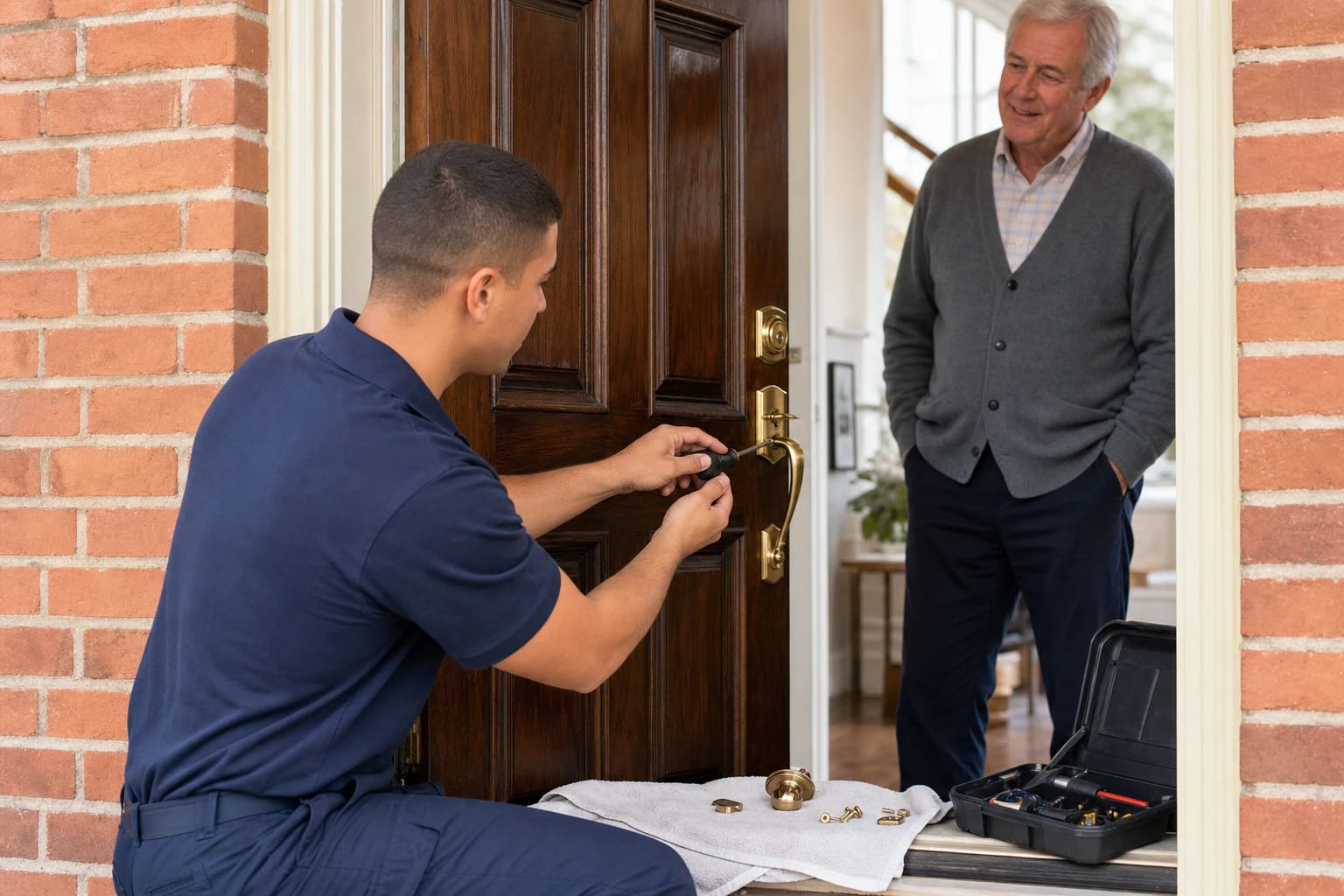
What lock repair covers
Diagnosing and fixing locks that stick, turn stiffly, will not latch, or have loose or misaligned parts.
- Diagnosing why the lock is sticking, binding, or failing to latch
- Cleaning and lubricating the lock mechanism where appropriate
- Adjusting or realigning the strike plate and latch
ID and proof you may access the property are checked before any work.
Lock Repair in South CarolinaSources
Public records and references this page draws on. They are outside USA Locksmith Pros and open in a new tab.
- City of Greenville: Heritage Historic Districtgreenvillesc.gov (external site, opens in a new tab)
- City of Greenville: Hampton-Pinckney Historic Districtgreenvillesc.gov (external site, opens in a new tab)
- City of Greenville: Design Guidelines for Preservation Overlay Districtsgreenvillesc.gov (external site, opens in a new tab)
- City of Greenville: Preservation and Urban Designgreenvillesc.gov (external site, opens in a new tab)