
Kenosha notes
Updated 4 sources
What wears locks out in Kenosha
NOAA's climate summary for Wisconsin finds that snowfall has increased since 1930 across the state away from Lake Superior's south shore, and that days with 2 inches or more of precipitation have become more frequent, with the 2015 to 2020 period having the most.
For a lock, that means more wet snow and slush working into keyways. Water that turns to ice inside a cylinder stiffens the pins, and a key forced against them can bend or snap. Road salt adds grit: the state Department of Transportation says it uses an average of 452,000 tons a season statewide, and salty slush that reaches keyholes dries into grit inside them. That is why a cylinder can feel rough even with a good key.
Older hardware worth keeping
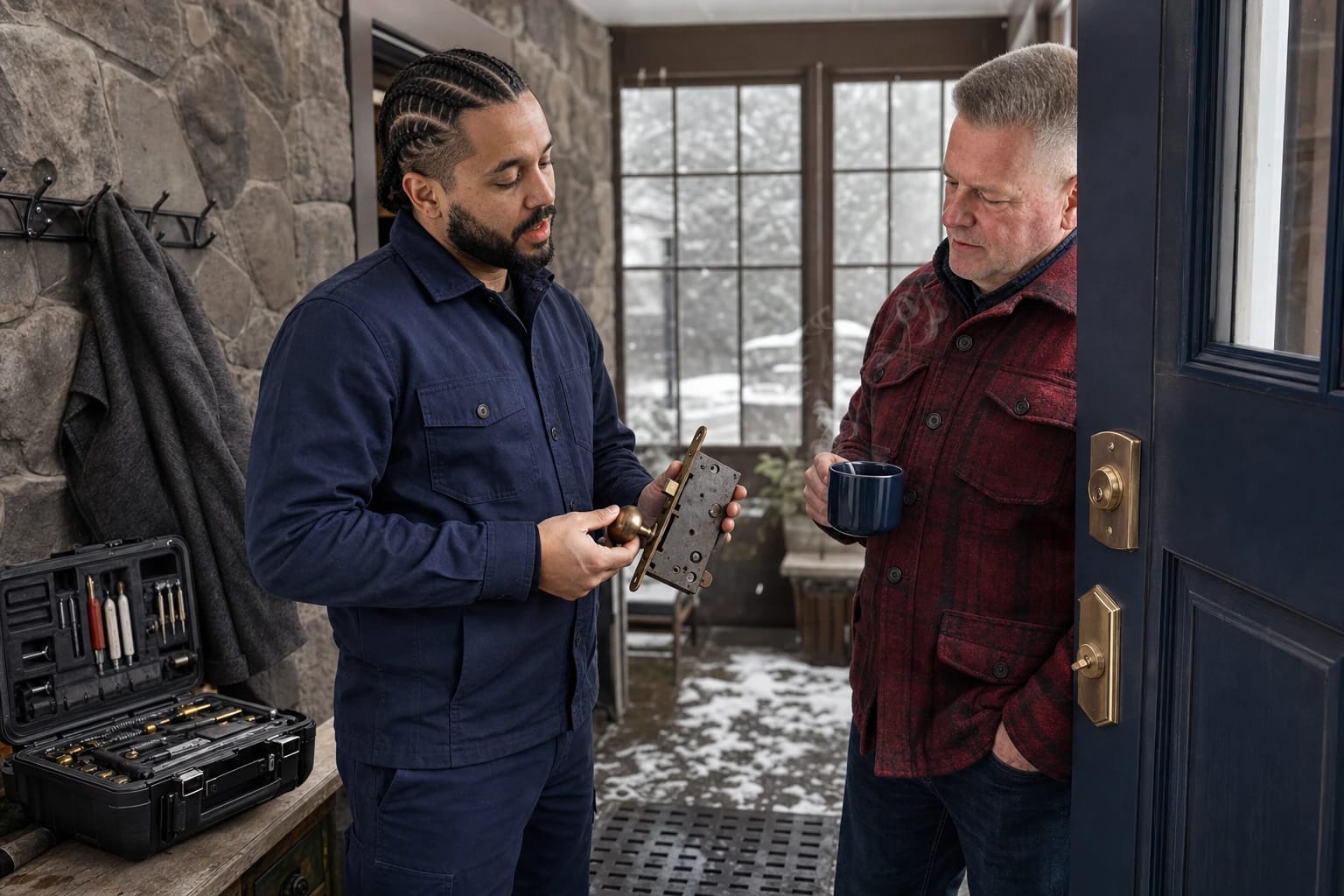
In the Third Avenue Historic District, where the period revival homes include Tudor Revival and Georgian Revival designs, an original door may still carry a mortise lock. A lock that old often needs cleaning, a new spring or a realigned strike rather than replacement, and repairing it keeps the original door whole.
Signs a lock needs repair rather than a new key:
- The key turns only when you push or pull on the door
- The latch drags or will not spring back
- The deadbolt stops short of its full throw
Code items that point to repair
Under Section 16.18 of Kenosha's property maintenance code, openable windows need working locking devices, and exits must open from the inside without keys, special knowledge or effort. A window latch that no longer closes, or an exit lever that sticks, falls under those items. This is general information, not legal advice.
Simple upkeep
- Use lock de-icer on a frozen cylinder instead of hot water, which can leave the lock icing over again.
- Wipe salt off keys and keyholes after winter errands, and use a lock-safe dry lubricant each fall.
- After a heavy rain soaks a basement or garage, work those locks a few times and look for rust.
In your request, name the door, describe the symptom and say whether the lock is original. The lock repair page has the service details. If a key has already snapped, see broken key extraction. More about the city: Kenosha.
At the door
What lock repair covers
Diagnosing and fixing locks that stick, turn stiffly, will not latch, or have loose or misaligned parts.
- Diagnosing why the lock is sticking, binding, or failing to latch
- Cleaning and lubricating the lock mechanism where appropriate
- Adjusting or realigning the strike plate and latch
ID and proof you may access the property are checked before any work.
Lock Repair in WisconsinSources
Public records and references this page draws on. They are outside USA Locksmith Pros and open in a new tab.
- NOAA NCICS State Climate Summaries, Wisconsinstatesummaries.ncics.org (external site, opens in a new tab)
- Wisconsin Department of Transportation, Winter maintenance factswisconsindot.gov (external site, opens in a new tab)
- Visit Kenosha, Third Avenue Historic District walking tourassets.simpleviewinc.com (external site, opens in a new tab)
- City of Kenosha Code of General Ordinances, Chapter XVI Property Maintenance Codelibrary.municode.com (external site, opens in a new tab)