
Boston notes
Updated 3 sources
How Boston winters wear on locks
NOAA's state climate summary puts January temperatures near the Massachusetts coast around 30 °F, just under 32 °F. At that temperature, meltwater that runs into a cylinder during the day can turn to ice overnight, and the key will not turn in the morning. The same summary calls the coastline highly vulnerable to nor'easters, tropical storms and hurricanes, which can bring flooding and spray to exterior doors.
The repairs that follow tend to be:
- A cylinder that turns stiffly, or only partway, after a cold snap.
- A latch or deadbolt that no longer meets its strike because an old wood door swells and shrinks with the seasons.
- Hardware that binds after nor'easter flooding or spray reaches the door.
- A stuck lock on a rear porch door. Three-deckers usually have utility porches at the back, so check those doors as well as the front.
Original hardware on Beacon Hill
In the Historic Beacon Hill District, the Architectural Commission's guidelines (Chapter 616 of the Acts of 1955, as amended) keep original doors and hardware in place and allow duplicates in the same material and style only when the originals are beyond repair. For an original lock there, repair is the natural first step: cleaning the case, replacing worn springs and servicing the cylinder keep the visible hardware on the door. This is general information, not legal advice.
Simple upkeep
- Use a dry lock lubricant rather than oil.
- If a key resists, stop rather than forcing it. A twisted key can snap and need broken key extraction.
- After flooding or spray reaches a door, rinse, dry and relubricate its exterior hardware.
- If you have to push or lift the door before the deadbolt throws, have the strike plate adjusted.
What to describe
Say what the lock does now (sticks, spins loosely, will not latch), when it started and which door it is on, and send a photo of the lock face and the door edge. See lock repair or the Boston page.
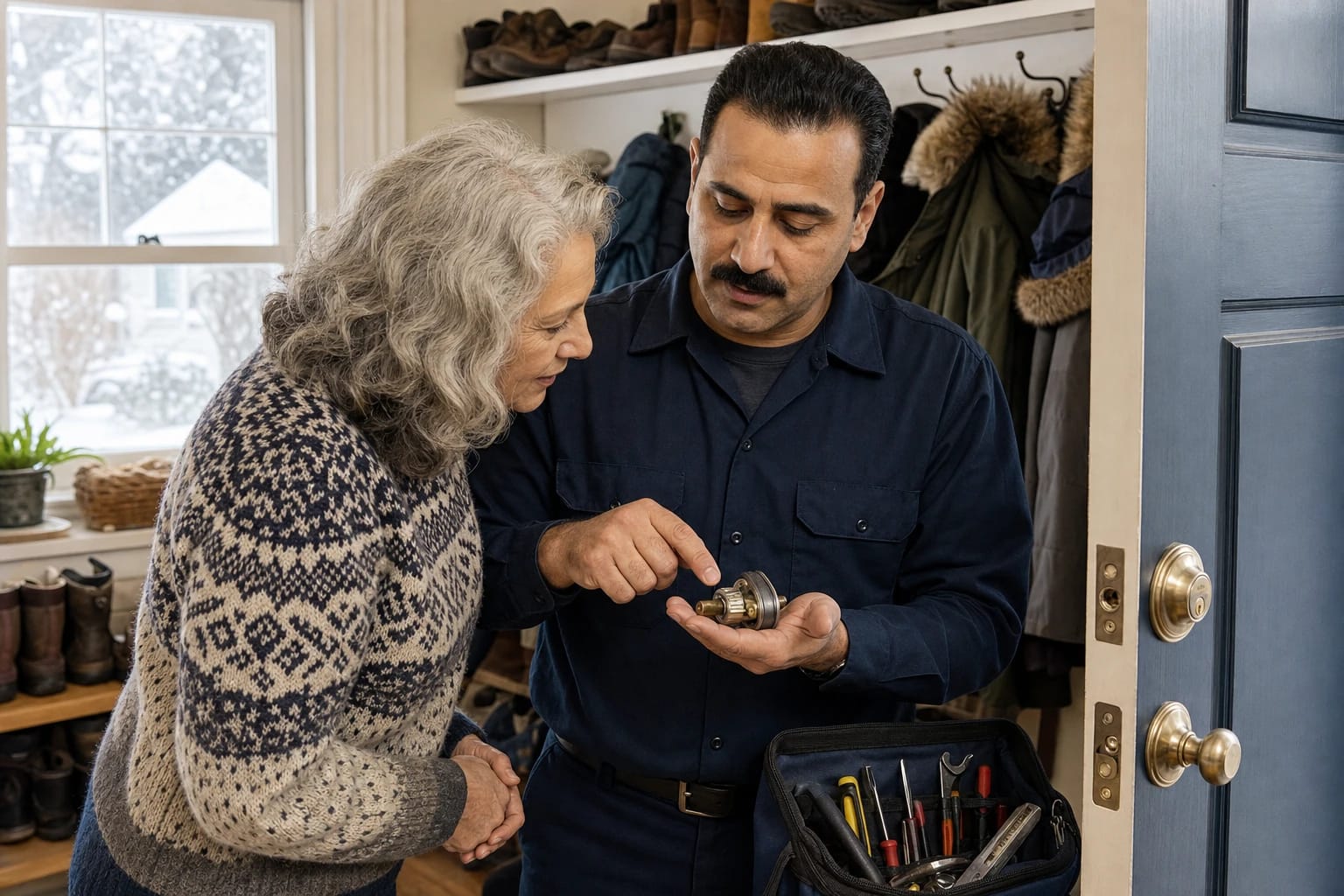
At the door
What lock repair covers
Diagnosing and fixing locks that stick, turn stiffly, will not latch, or have loose or misaligned parts.
- Diagnosing why the lock is sticking, binding, or failing to latch
- Cleaning and lubricating the lock mechanism where appropriate
- Adjusting or realigning the strike plate and latch
ID and proof you may access the property are checked before any work.
Lock Repair in MassachusettsSources
Public records and references this page draws on. They are outside USA Locksmith Pros and open in a new tab.
- NOAA NCEI and NCICS, State Climate Summaries 2022: Massachusettsstatesummaries.ncics.org (external site, opens in a new tab)
- Historic Beacon Hill District Architectural Guidelines (City of Boston)boston.gov (external site, opens in a new tab)
- Three-decker (Wikipedia)en.wikipedia.org (external site, opens in a new tab)