
Minneapolis notes
Updated 5 sources
Businesses in the Warehouse District
The Minneapolis Warehouse Historic District covers roughly the blocks bounded by 1st Avenue North, 1st Street North, 10th Avenue North and 6th Street North, and was listed on the National Register in 1989. Its warehouses served the city's wholesale trade from 1865 to 1930, and many now hold offices, commercial space and homes.
For a business there, the lock question usually splits in two: the doors your company controls, such as a suite, storefront or back room, and the common doors the building controls, such as the street entrance, garage and elevator. Say which one needs work, and bring building management in on anything shared.
Exterior work takes more planning. Designation covers exteriors. The heritage preservation ordinance, Chapter 599, dates to 1972 and took effect in updated form on January 1, 2026; it calls for preservation review before a designated property is altered, and the city's application for that review names doors and windows. Rekeying leaves the exterior as it is, but a new storefront door is something to raise with the city before hardware is ordered. This is general information, not legal advice.
Downtown and the skyway
Downtown's skyway system connects around 80 blocks through second-level walkways totaling more than 10 miles. Each skyway belongs to the buildings it links, so schedules differ; most are open until 6 p.m. on weekdays and closed on weekends. A shop or office that opens onto the skyway has two fronts, the second-level corridor and the street, and their schedules rarely match. A skyway-facing door that will not lock is worth securing before the corridor closes.
Turnover and who holds keys
Staff leave and tenants change suites. When they do:
- Rekey the cylinders the departing person could open, starting with exterior and cash-room doors.
- Consider a master key system, so managers carry one key while each suite or department has its own.
- Keep a written log of who holds which key.
In a request, include the building name or cross streets, which door (street, skyway level, suite or service), who controls it and how many cylinders are involved. Lock rekeying covers the cylinder work, and Minneapolis the city.
Business premises
What commercial locksmith covers
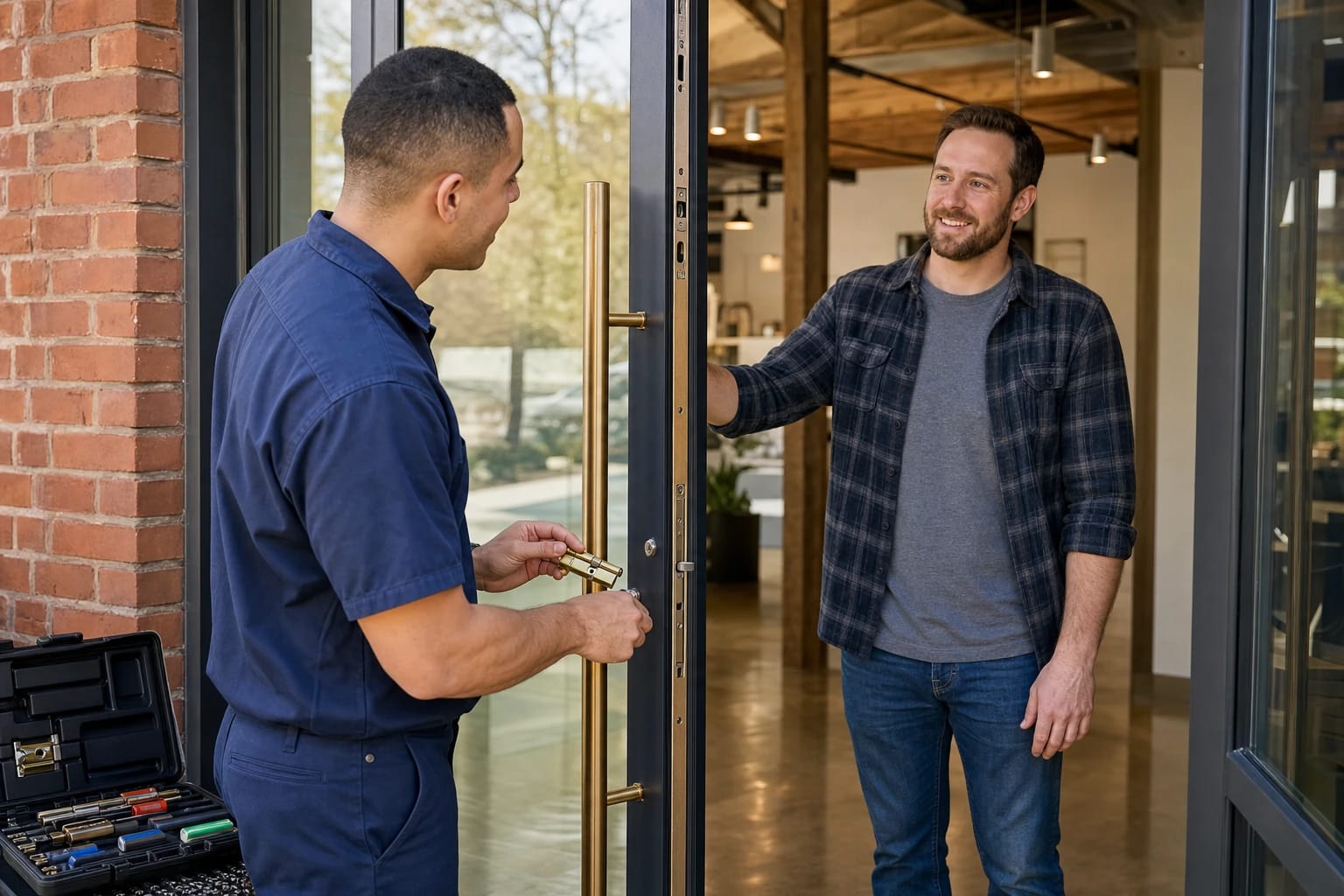
Lock and key work for offices, storefronts, and other business premises, from rekeying and repairs to hardware upgrades.
- Rekeying locks after staff or tenant changes
- Repair and replacement of commercial-grade locks and cylinders
- Lockout help for business premises
ID and proof you may access the property are checked before any work.
Commercial Locksmith in MinnesotaSources
Public records and references this page draws on. They are outside USA Locksmith Pros and open in a new tab.
- City of Minneapolis, Minneapolis Warehouse Historic Districtminneapolismn.gov (external site, opens in a new tab)
- City of Minneapolis, Chapter 599 Heritage Preservation Ordinance Updatesminneapolismn.gov (external site, opens in a new tab)
- City of Minneapolis, Preservation Reviewminneapolismn.gov (external site, opens in a new tab)
- City of Minneapolis, Administrative Preservation Applicationminneapolismn.gov (external site, opens in a new tab)
- Meet Minneapolis, Minneapolis Skyway Guideminneapolis.org (external site, opens in a new tab)