
Minneapolis notes
Updated 3 sources
What Minneapolis winters do to locks
The Minnesota DNR counted 53 days at or below zero in the Twin Cities by March 3 of winter 2013–14, against a 1981–2010 normal of 24 for a whole winter. A cold like that repeats two faults:
- Frost in the latch and strike. Warm indoor air reaching a subzero door can leave frost in the strike or the bolt hole. Use lock de-icer; hot water can run into the cylinder and turn to ice there.
- Seasonal binding. A door and its frame shift between summer and a hard January. A deadbolt that throws easily in August but drags in January often points to a shifted door or frame, with the bolt rubbing the strike, and adjusting the strike plate can cure it without new hardware.
Older hardware worth repairing
Much of Longfellow went up between 1906 and the 1920s, so some entry locks there are roughly a century old. A mortise lock of that age often needs cleaning, a spring or a new cylinder rather than full replacement. A worn key also wears the pins it rides on, so a fresh key cut to the lock can make an older cylinder work more smoothly.
Landlords have a second reason to keep hardware sound. Inspectors working from the Rental Property Checklist, which reflects Chapter 244 (the Housing Maintenance Code), look for doors that fit their frames, close and latch securely, and have properly working hardware. Before an inspection, check that each door closes without a shove, the latch catches and the deadbolt throws all the way. This is general information, not legal advice.
Simple upkeep
- Before winter, use a dry or graphite lubricant made for locks; oil collects grit.
- Tighten loose hinge screws, since a sagging door causes many sticking bolts.
- Note whether a problem shows up only on cold days; that points to alignment or frost rather than a failed lock.
A repair request helps most with the neighborhood, which door, a photo of the lock and what happens when you use it. If parts are no longer made, see lock replacement. For the wider picture, see Minneapolis.
At the door
What lock repair covers
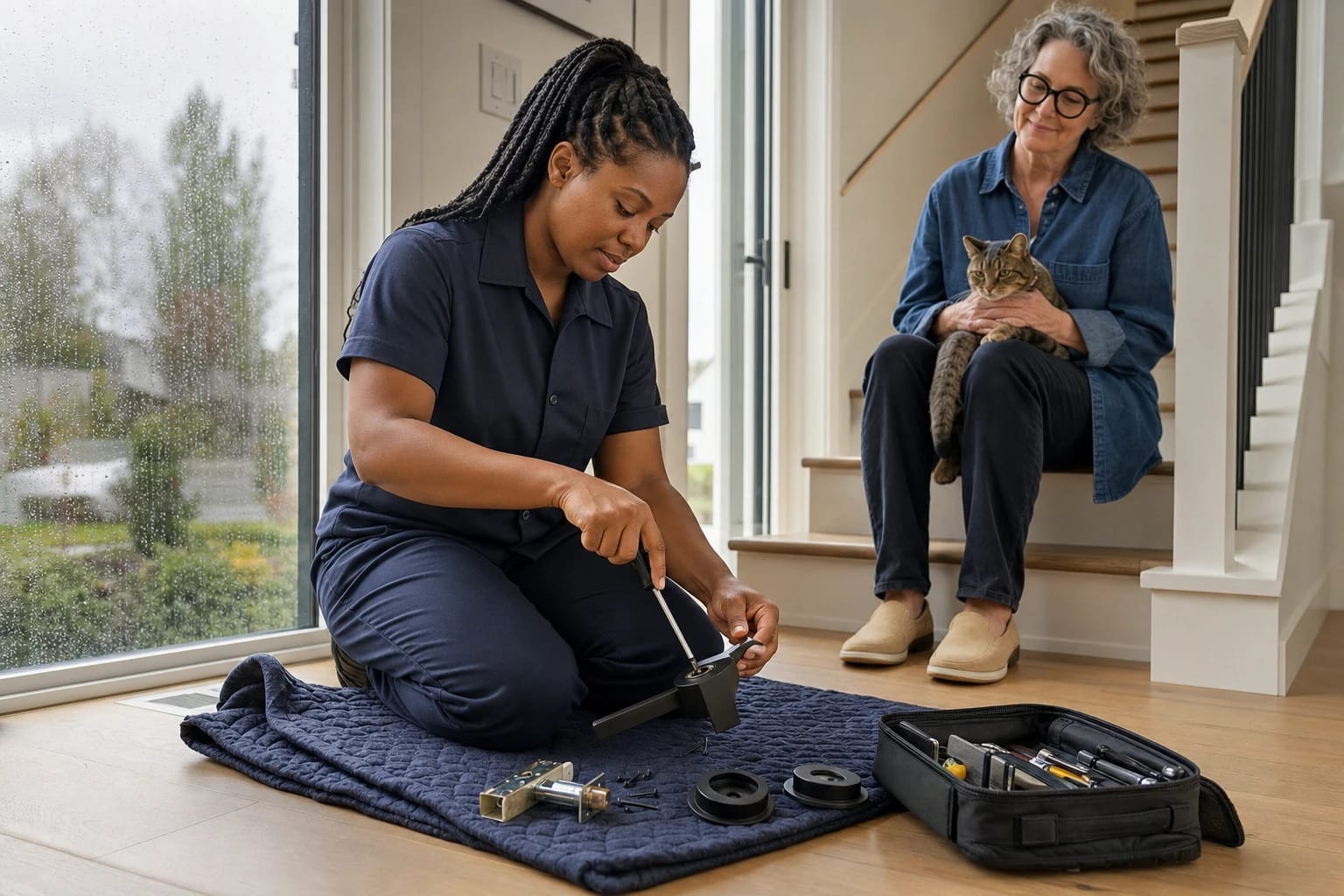
Diagnosing and fixing locks that stick, turn stiffly, will not latch, or have loose or misaligned parts.
- Diagnosing why the lock is sticking, binding, or failing to latch
- Cleaning and lubricating the lock mechanism where appropriate
- Adjusting or realigning the strike plate and latch
ID and proof you may access the property are checked before any work.
Lock Repair in MinnesotaSources
Public records and references this page draws on. They are outside USA Locksmith Pros and open in a new tab.