
Albuquerque notes
Updated 5 sources
How dry air, dust and storms wear on a lock
The Western Regional Climate Center describes New Mexico as arid to semiarid. In the warm months, afternoon humidity is often below 20 percent, spring brings wind and blowing dust in dry spells, and July and August storms are short but often intense.
- Dust. Schlage's A-Series service manual cautions that in dusty places the grease inside a lock can become contaminated and slow it down. A sluggish latch after a windy spring may need only cleaning and fresh lubricant.
- Dry air. The USDA Wood Handbook explains that wood exchanges moisture with the air around it and shrinks as it dries, which can warp it. When a wood door or frame moves this way, a deadbolt can rub its strike plate or stop short of it. Adjusting the strike is a repair job, not a reason for a new lock.
- Summer moisture. When the storms return, the same wood can take moisture back, so a bolt that slid easily in April may bind by August.
Older hardware worth keeping
Nob Hill was built out between about 1925 and 1950, so some of its doors may still carry early locks. Where a lock still fits its door, repair keeps the original trim and avoids new holes. In houses from the 1970s and 1980s, a loose knob or lever, a weak latch spring and a stiff cylinder are worth checking first.
Upkeep between repairs
- For the cylinder, blow a small amount of graphite or a similar material into the keyway, as the Schlage manual directs, and skip oil and sprays there.
- After a windy, dusty day, wipe the key and the lock face before the next use.
- Tighten the screws on the strike plate and inside trim when they loosen.
- If the deadbolt throws only when you lift the door, note the month; the strike may need adjusting as the wood moves.
Describing the fault
- which lock, and what it does: sticks, will not latch, will not throw, key hard to turn
- whether the problem comes and goes with the season
- the door material, and whether it rubs its frame
Hardware past saving is a lock replacement question. The service itself is on the lock repair page.
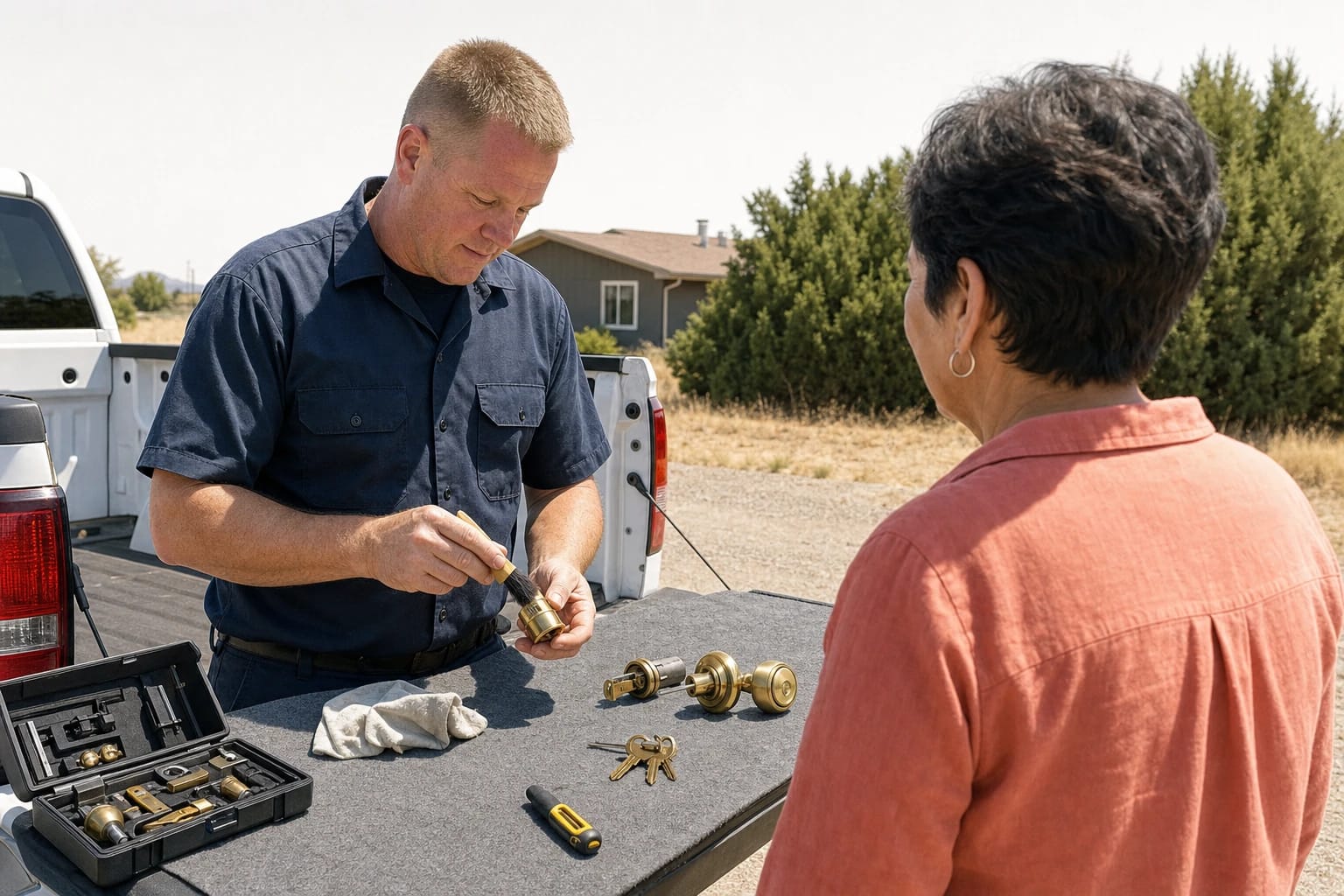
At the door
What lock repair covers
Diagnosing and fixing locks that stick, turn stiffly, will not latch, or have loose or misaligned parts.
- Diagnosing why the lock is sticking, binding, or failing to latch
- Cleaning and lubricating the lock mechanism where appropriate
- Adjusting or realigning the strike plate and latch
ID and proof you may access the property are checked before any work.
Lock Repair in New MexicoSources
Public records and references this page draws on. They are outside USA Locksmith Pros and open in a new tab.
- Western Regional Climate Center, Climate of New Mexicowrcc-archive.dri.edu (external site, opens in a new tab)
- Schlage, A-Series Service Manual (lubrication)commercial.schlage.com (external site, opens in a new tab)
- USDA Forest Products Laboratory, Wood Handbook, Chapter 4: Moisture Relations and Physical Properties of Woodfpl.fs.usda.gov (external site, opens in a new tab)
- Nob Hill, Albuquerque, Wikipediaen.wikipedia.org (external site, opens in a new tab)
- U.S. Census Bureau ACS 2024 1-year via Census Reporter, Year structure built, units in structure and tenure (B25034, B25024, B25003)api.censusreporter.org (external site, opens in a new tab)