
Philadelphia notes
Updated 2 sources
Storefront corridors and their doors
The Philadelphia Department of Commerce lists Frankford, Germantown, Castor, Lancaster and Woodland avenues and 52nd Street among the city's commercial corridors. Many storefronts along them close behind security gates or grilles, so a shop there has two layers of locks: the door and the gate. A commercial lock job can therefore cover more than the door itself: the grille and its lock, the release that opens it from inside, and the rear or side door that staff use.
What the city's gate and grille standard asks for
The City of Philadelphia's EZ permit standard for security gates and grilles sets requirements that bear on which locks and releases can go on a storefront:
- Whatever is installed across the front must leave the building substantially visible at all times, which rules out solid shutters.
- While the space is occupied, a gate at a main exit has to open from the inside with no key, special knowledge or effort.
- When the public is inside, grilles are to stay secured fully open, with at least 7 feet of clearance above the sidewalk.
In practice, a main-exit gate that needs a key to open from inside while staff are there, or a grille left partway down while customers are in the shop, does not fit those terms. Check the permit standard before swapping a grille lock or adding a new gate. This is general information, not legal advice.
Keys and turnover
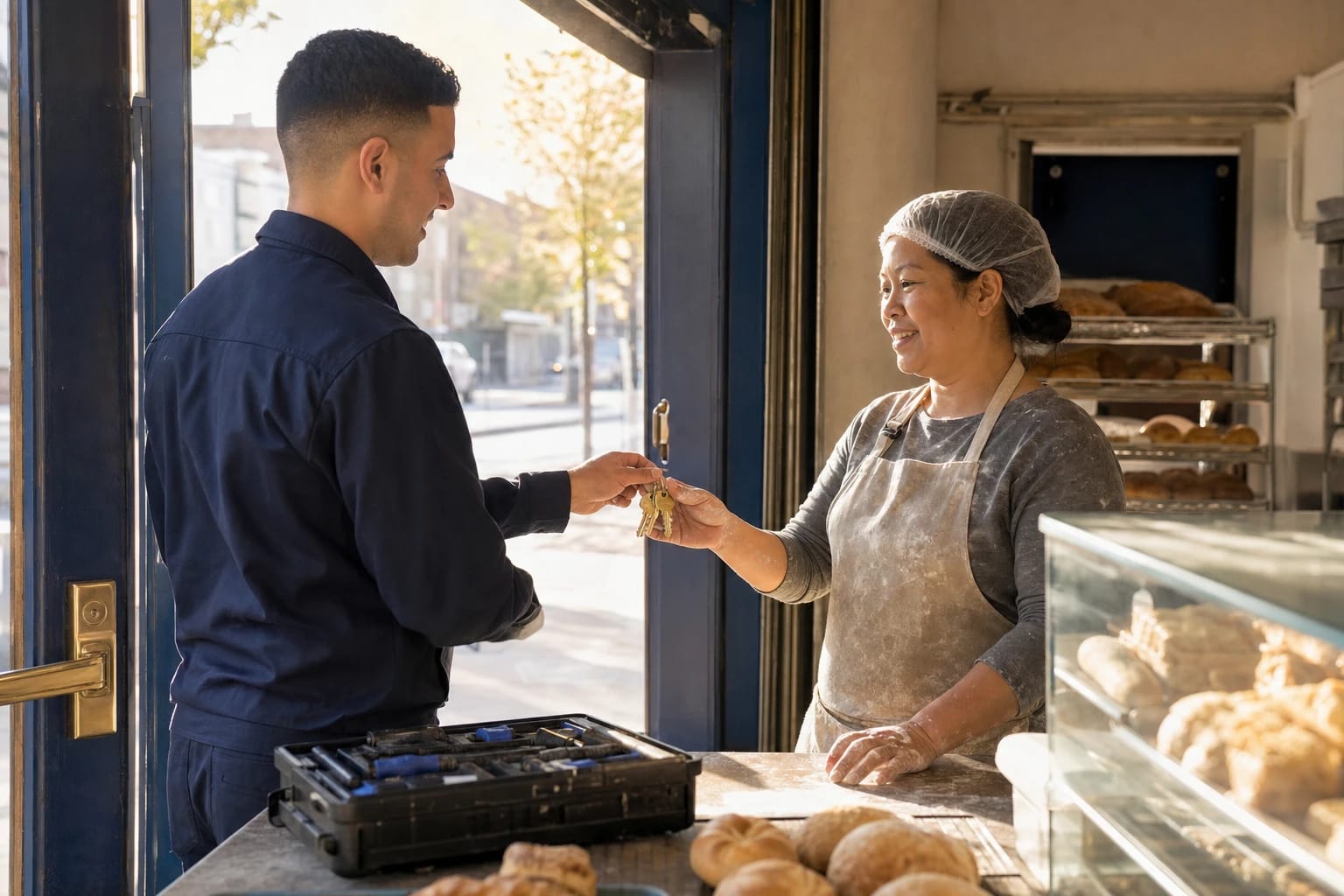
A storefront with a grille often has staff, cleaners and contractors carrying keys to both the gate and the door, and not every key comes back when people move on. When someone with a key leaves, or when a new tenant takes over the space, lock rekeying makes the old keys stop working without replacing hardware. Keep a written list of who holds which key; it makes the next change simpler.
Details that help a commercial request
Give the business name, the corridor and block, and each opening involved: glass storefront door, rear door, grille or gate, office door. Say how many keys are in circulation, whether you lease the space, and whether the landlord must approve lock changes. The commercial locksmith page describes the service, and the Philadelphia overview lists the corridors.
Business premises
What commercial locksmith covers
Lock and key work for offices, storefronts, and other business premises, from rekeying and repairs to hardware upgrades.
- Rekeying locks after staff or tenant changes
- Repair and replacement of commercial-grade locks and cylinders
- Lockout help for business premises
ID and proof you may access the property are checked before any work.
Commercial Locksmith in PennsylvaniaSources
Public records and references this page draws on. They are outside USA Locksmith Pros and open in a new tab.