
Philadelphia notes
Updated 3 sources
Humid summers and a dragging deadbolt
NOAA's climate summary for the state calls out extreme heat and humidity in Philadelphia. Wood doors take on moisture in the humid months and can swell against the frame, so a deadbolt that throws smoothly in January may drag or stop short of its strike in July. Test it with the door open. If the bolt moves smoothly that way, the lock is sound and the fit between door and frame is the problem, which is usually fixed by adjusting the strike plate or tightening the hinges rather than replacing anything.
Winter cold and storm water
PennDOT puts the Philadelphia district's average snowfall at about 14 inches, against 83 in its northwest district, yet one cold night is enough to ice up a cylinder that took on water. Use a lock de-icer and turn the key gently; forcing it is how keys snap off in the lock. Water is the slower threat. NOAA says extreme precipitation has become more frequent in Pennsylvania, and it lists the flooding from Tropical Storm Agnes in 1972 and from the remnants of Hurricane Irene and Tropical Storm Lee in 2011. A lock that sat in floodwater can corrode inside while looking sound outside, so have it cleaned and checked before it seizes.
Older hardware worth keeping
The rowhouse manual advises reusing old doors rather than replacing them, and repair keeps an old door and its hardware in service. In the vestibule rows of Manayunk and South Philadelphia there are two doors that can stick or fail to latch, so note which one is acting up. Simple upkeep, timed to the seasons above, helps:
- Before the humid months, lubricate cylinders with graphite or a lock-specific product, not household oil that collects grit.
- Tighten loose screws on handles, hinges and strike plates so a swollen door does not sag against the frame.
- Before the first cold snap, treat a key that needs jiggling as a warning sign of wear, not a quirk.
Describing the problem
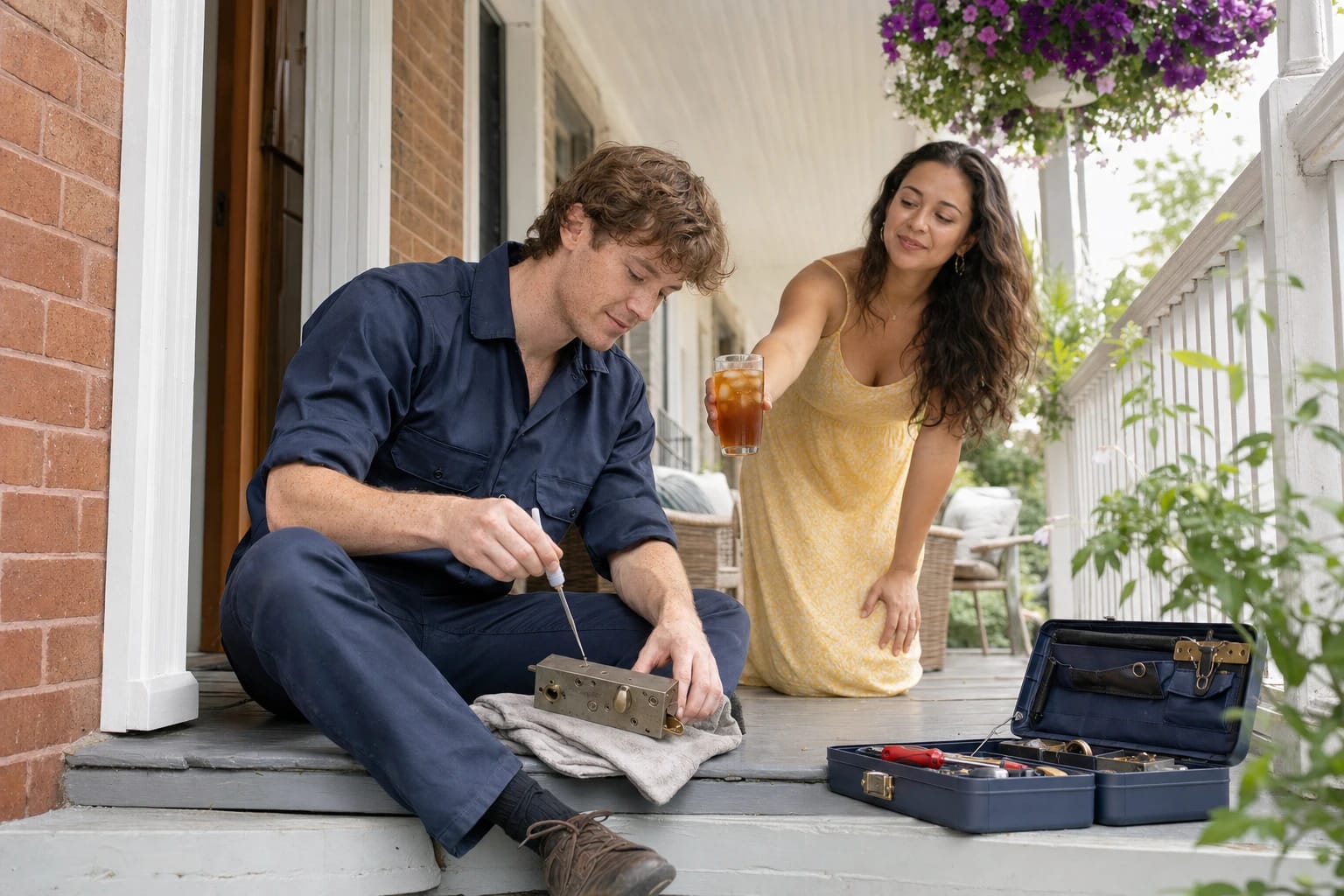
Name the door, describe what it does (sticks, will not latch, key turns hard, bolt will not reach) and whether it changes with the weather. Add photos of the lock and door edge. If the hardware is past saving, see lock replacement. The lock repair page explains the work; Philadelphia covers local housing.
At the door
What lock repair covers
Diagnosing and fixing locks that stick, turn stiffly, will not latch, or have loose or misaligned parts.
- Diagnosing why the lock is sticking, binding, or failing to latch
- Cleaning and lubricating the lock mechanism where appropriate
- Adjusting or realigning the strike plate and latch
ID and proof you may access the property are checked before any work.
Lock Repair in PennsylvaniaSources
Public records and references this page draws on. They are outside USA Locksmith Pros and open in a new tab.