
Chandler notes
Updated 4 sources
Houses with a long key history
The Census Bureau's 2024 estimates put 59,011 of Chandler's 114,957 homes, about 51 percent, in the 1990s and 2000s alone: 28,519 built in the 1990s and 30,492 in the 2000s. Houses of that vintage may have gone through several owners, tenants, contractors and house sitters, and any of them could have kept a copy. Owners rarely know how many copies exist, and a key cut years ago leaves no record of where its duplicates went. Rekeying leaves the lock on the door and changes which key operates it, so every earlier copy stops working, and the door looks exactly as it did before.
Rentals between tenants
Renters hold 40,550 of Chandler's occupied homes, 36.8 percent. Two sections of Arizona's residential landlord-tenant law come up in these situations: A.R.S. 33-1343 covers a landlord's entry into a unit, and 33-1367 covers a tenant whom the landlord unlawfully removes or excludes. Neither section mentions rekeying or changing locks, so check the lease for lock and key terms. A tenant should ask in writing before changing a lock, and a landlord turning over a unit has the same reason to change the key that a new owner does. That is a reading of two statutes, not advice about any particular lease.
One key for several doors
In March 2024 Chandler adopted zoning amendments that include allowing accessory dwelling units on single-family lots. A backyard unit, a side door, a shed and a garage entry can each be keyed the same as the front door or on their own keys, and the choice has consequences. Keyed alike means one key opens every door. Separate keys mean whoever lives in the back unit cannot open the main house, and the reverse.
What to have ready
- the address and the type of home: house, townhome or apartment
- the number of locks and the doors they protect
- whether the doors should share one key or stay separate
- who owns the home and, if it is rented, what the landlord has agreed to
- how many working keys exist, and the lock brand if it is stamped on the hardware
A lock that is damaged, rather than simply known to too many people, belongs under lock replacement. The process for changing keys is described on the lock rekeying page, and the city is under Chandler.
At the door
What lock rekeying covers
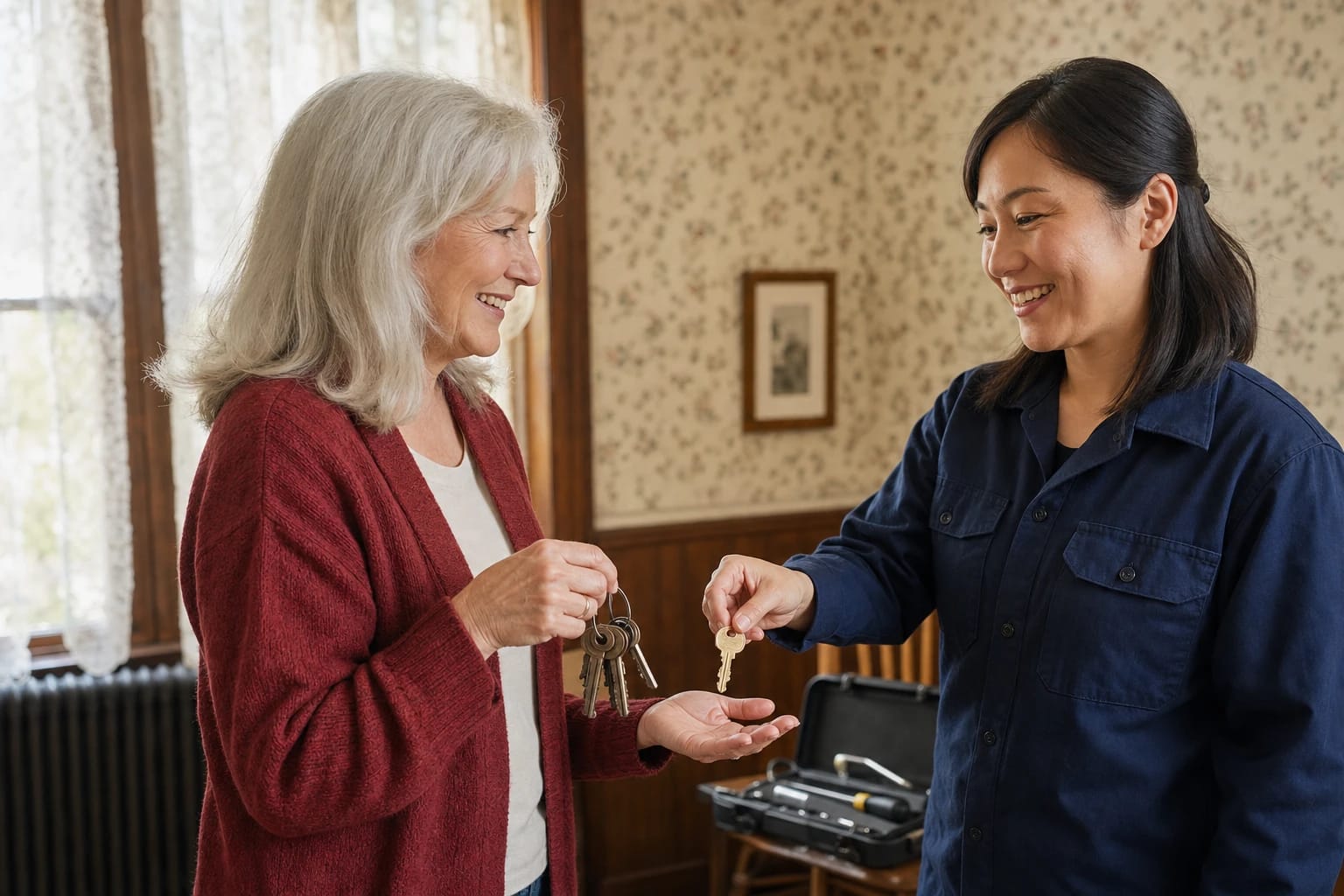
Changing the pins inside your existing locks so old keys stop working, without replacing the hardware.
- An inspection of each lock to confirm it can be rekeyed
- Re-pinning each cylinder to work with a new key
- New keys cut for the rekeyed locks
ID and proof you may access the property are checked before any work.
Lock Rekeying in ArizonaSources
Public records and references this page draws on. They are outside USA Locksmith Pros and open in a new tab.
- U.S. Census Bureau ACS 2024 1-year via Census Reporter, Year structure built, units in structure and tenure (B25034, B25024, B25003)api.censusreporter.org (external site, opens in a new tab)
- Arizona Revised Statutes 33-1343, Access to dwelling unitazleg.gov (external site, opens in a new tab)
- Arizona Revised Statutes 33-1367, Tenant's remedies for unlawful ousterazleg.gov (external site, opens in a new tab)
- City of Chandler, Housing Update addresses Development, State Lawschandleraz.gov (external site, opens in a new tab)