
Allentown notes
Updated 3 sources
What snow and thaw do to locks
PennDOT's average snowfall figure for its district covering Berks and Lehigh counties is 30 inches. Snow and meltwater get into keyways and latch openings, ice up overnight, and leave grit and corrosion behind when they thaw. Doors and frames also shift a little with the seasons, enough to put a latch or deadbolt out of line. If a deadbolt drags only in the humid months, the fit of the door in its frame is worth checking before the lock is replaced.
The symptoms are familiar:
- A key that turns stiffly, or only after jiggling, often from dirt or wear on the pins
- A latch that sticks or will not catch because the door has dropped or swelled
- A deadbolt that only throws when you push or pull on the door, a sign that the bolt no longer meets the strike plate squarely
- An iced cylinder: a lock de-icer is the fix, and forcing the key can snap it
Keeping older hardware working
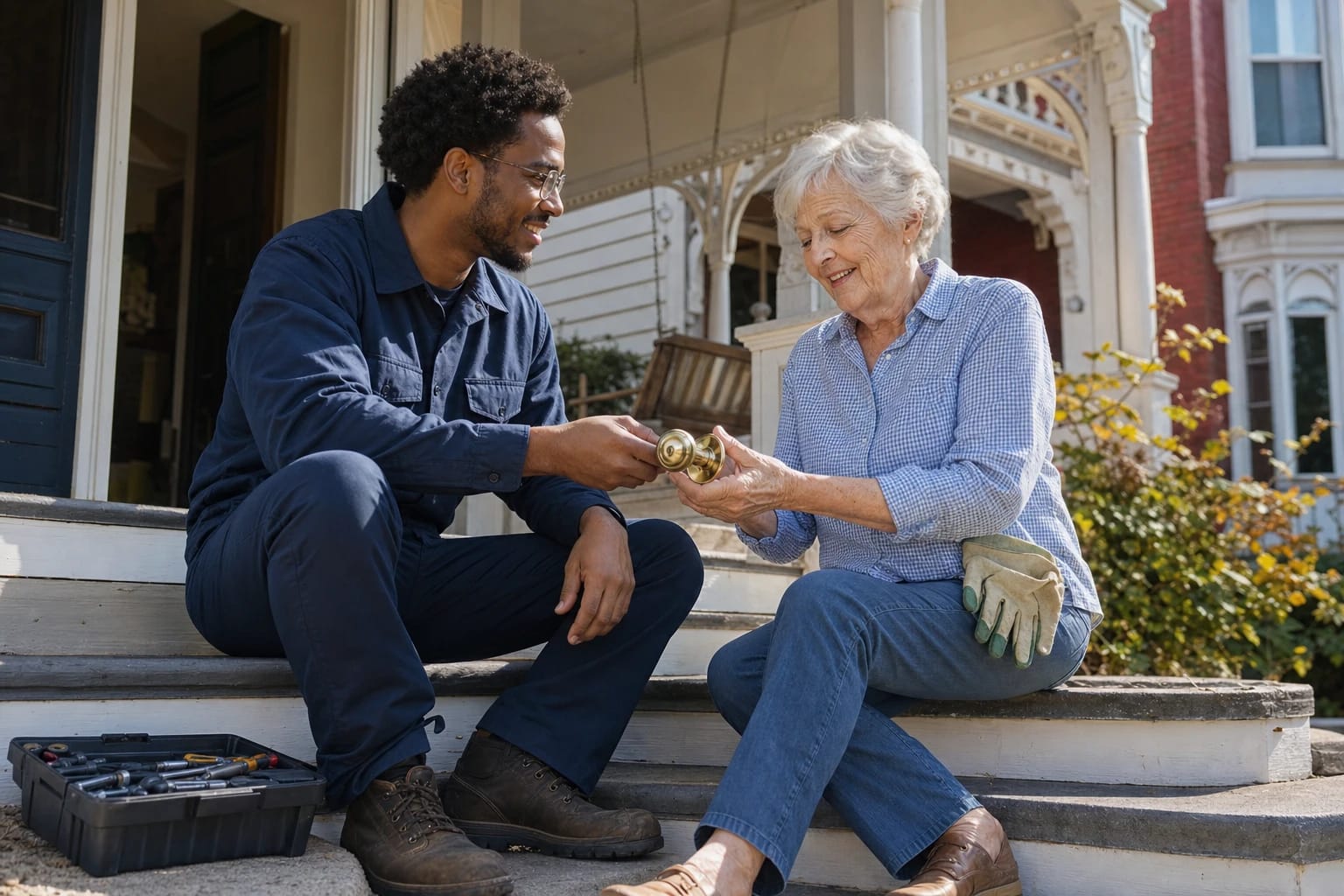
Victorian architecture is most common in Old Fairgrounds and Jordan Heights, and Old Fairgrounds is also one of Allentown's historic districts (1981). Original locksets on houses like these are often worth repairing rather than replacing, and a repair leaves the door looking as it did from the street. Worn springs, sticking levers and loose knobs in older mortise locks can often be fixed or rebuilt, and new keys can be cut to fit old cylinders.
Simple upkeep
- Lubricate the keyway once or twice a year, starting in the fall before the snow and salt, with dry graphite or a lock lubricant, not household oil, which traps grit.
- Tighten loose strike plate and hinge screws; a sagging door is a common cause of a latch that will not catch.
- Keep snow and ice off the threshold so the door can close fully.
- Replace bent or thin keys. A copy of a worn key copies the wear, so cut new ones from the original or from a code.
If a key has already snapped in the lock, see broken key extraction. The lock repair page describes the service itself.
At the door
What lock repair covers
Diagnosing and fixing locks that stick, turn stiffly, will not latch, or have loose or misaligned parts.
- Diagnosing why the lock is sticking, binding, or failing to latch
- Cleaning and lubricating the lock mechanism where appropriate
- Adjusting or realigning the strike plate and latch
ID and proof you may access the property are checked before any work.
Lock Repair in PennsylvaniaSources
Public records and references this page draws on. They are outside USA Locksmith Pros and open in a new tab.