
Pittsburgh notes
Updated 3 sources
What Pittsburgh winters do to locks and doors
PennDOT's figures for its Allegheny County district average 43 inches of snow a winter, and salt from treated roads gets tracked onto steps and thresholds. Salt speeds corrosion on latches, strike plates and exposed screws, and damp inside a cylinder can ice over on a cold night.
Many winter complaints start with the door rather than the lock. Wood doors swell and shrink with the seasons, and repeated cold snaps and thaws can shift a frame until the bolt no longer meets the hole in the strike plate. The deadbolt then turns only when you push or pull on the door. Adjusting or moving the strike plate often fixes that without new hardware.
NOAA's Pennsylvania climate summary says extreme precipitation events have become more frequent. If a lock on a basement or ground-floor door sat in floodwater, have it checked for corrosion even if it still turns.
Older locks in the South Side Flats
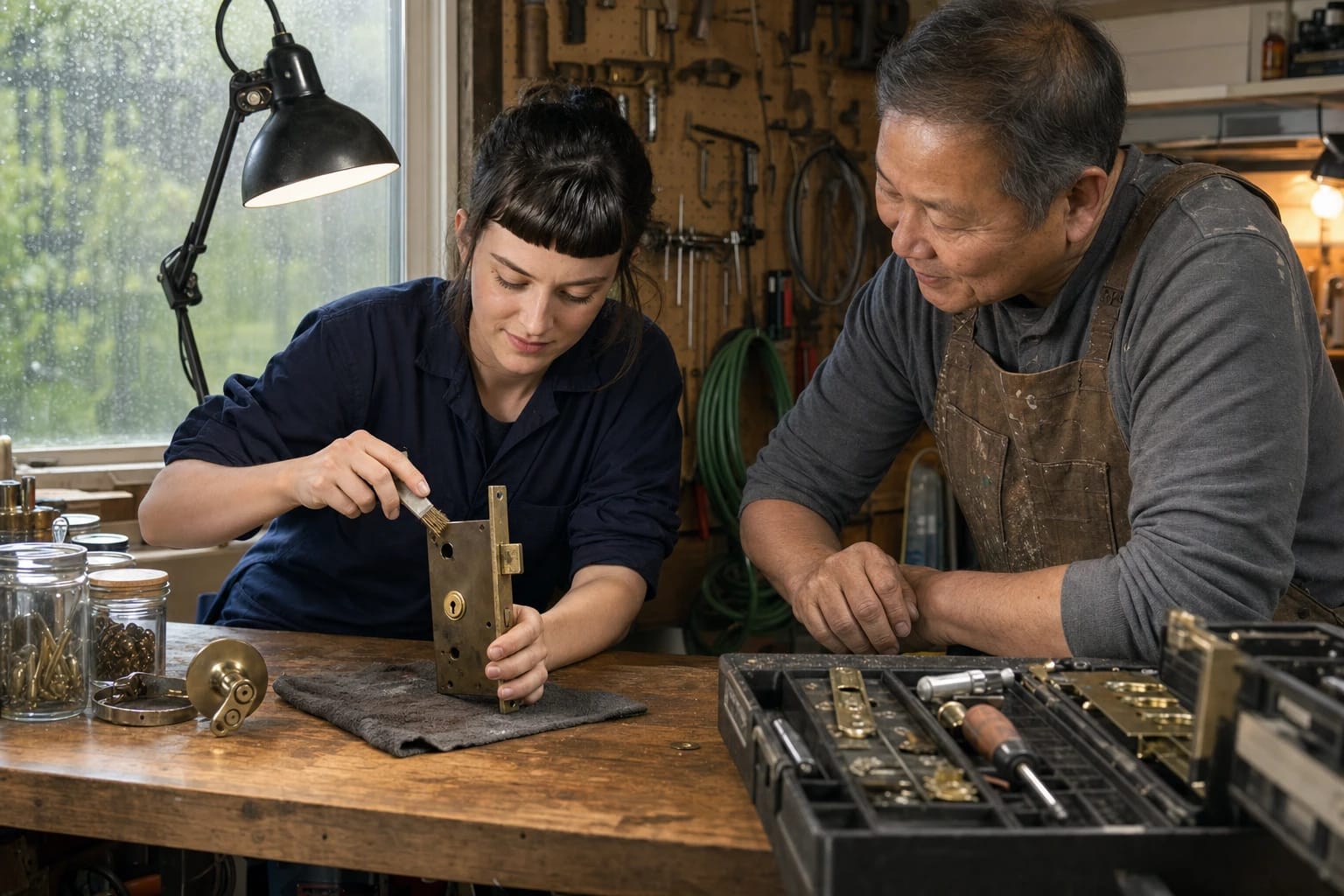
The South Side Flats has one of the city's largest concentrations of 19th-century homes. On doors that old, repair can mean freeing a sticky mortise lock, replacing a worn spring or broken part inside the lock case, or resetting a strike plate that has worked loose in a patched frame. Keeping the original lock working also keeps its mortise pocket in use, where a modern lockset might need the door cut or filled to fit.
Simple upkeep between repairs
- Use dry graphite or a lubricant made for locks; heavy oil collects grit.
- If the key turns hard in the cold, ease off rather than forcing it; a snapped key needs broken key extraction.
- Sweep salt and slush off the threshold and wipe down the hardware.
- Tighten loose screws on strike plates and trim before the holes strip.
What to describe in a repair request
Say what the lock does and when: the key turns hard, the bolt won't throw, the latch won't catch, or the trouble shows up only in winter. Send photos of both sides of the lock and of the door edge. If the lock turns out to be past saving, the next step is lock replacement. For the service, see lock repair; for housing, see Pittsburgh.
At the door
What lock repair covers
Diagnosing and fixing locks that stick, turn stiffly, will not latch, or have loose or misaligned parts.
- Diagnosing why the lock is sticking, binding, or failing to latch
- Cleaning and lubricating the lock mechanism where appropriate
- Adjusting or realigning the strike plate and latch
ID and proof you may access the property are checked before any work.
Lock Repair in PennsylvaniaSources
Public records and references this page draws on. They are outside USA Locksmith Pros and open in a new tab.