
Toledo notes
Updated 5 sources
Owners, renters and moving day
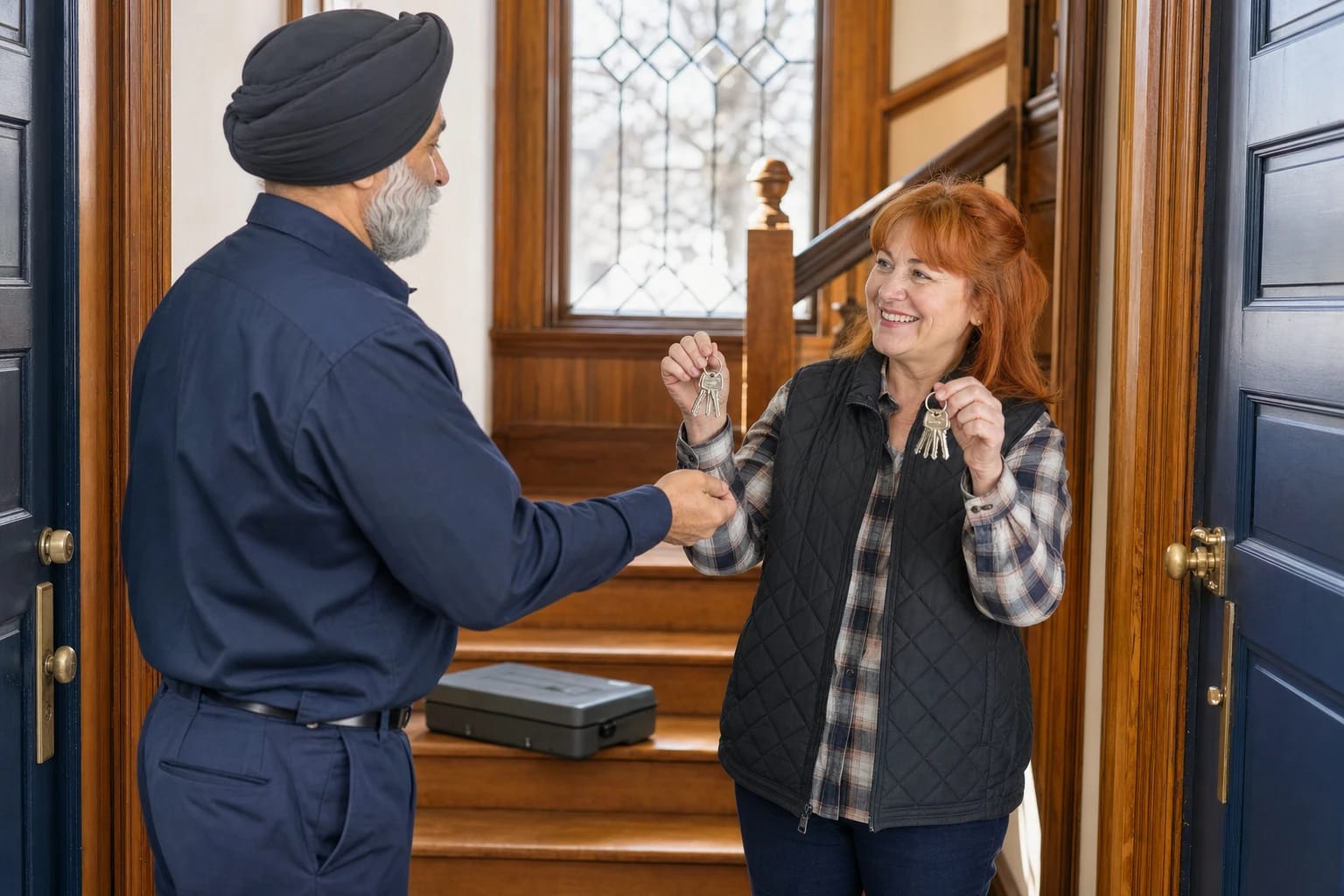
Rekeying gives a lock new pins and a new key, so every old key stops working while the hardware stays on the door. Toledo is a near-even split between owners and renters: Census Bureau data for 2024 show owners in 53.1 percent of occupied homes, while renters are the majority in Columbus (54.1 percent), Cleveland (53.9) and Cincinnati (59.9). Keys change hands at lease changes as well as at sales.
- A new owner. Sellers, relatives, contractors and neighbors may still hold copies you never see.
- A tenant has left. The next tenant should hold the only working keys.
- A missing key. A set lost on a bus or at work is reason enough.
Re-renting under Lead Safe Toledo
The city says that under the Lead Safe Toledo ordinance, Toledo Municipal Code Chapter 1760, rentals with one to four units built before 1978 need a valid Lead-Safe Certificate before they are rented or re-rented. Age and unit count set the test, and 30.9 percent of Toledo homes are in buildings that predate 1940, well before the 1978 line. A landlord already preparing a vacant unit for that certificate can have the locks rekeyed during the same turnover.
Tenants and the lease
A Toledo tenant who wants a lock rekeyed should read the lease first, because no section of Ohio Revised Code Chapter 5321 deals specifically with locks. Section 5321.04(A)(8) says that, except in an emergency or where impracticable, a landlord must give reasonable notice before entering and enter only at reasonable times; a full day's notice is presumed reasonable. Check whether the lease requires the landlord to hold a working key. This is general information, not legal advice.
Counting the locks
About 53 percent of Toledo's homes date from 1940 to 1979, and their side, basement and garage doors add locks to keep on one key. Rekeying can bring them onto a single key when the cylinders take the same key type. In your request, list each lock, the brand if it is stamped on the face, and which doors should share a key. A lock that sticks or spins may need lock replacement instead of new pins. General details are on the lock rekeying page, and city notes on the Toledo page.
At the door
What lock rekeying covers
Changing the pins inside your existing locks so old keys stop working, without replacing the hardware.
- An inspection of each lock to confirm it can be rekeyed
- Re-pinning each cylinder to work with a new key
- New keys cut for the rekeyed locks
ID and proof you may access the property are checked before any work.
Lock Rekeying in OhioSources
Public records and references this page draws on. They are outside USA Locksmith Pros and open in a new tab.
- U.S. Census Bureau ACS 2024 1-year via Census Reporter, Year built, units in structure and tenure (B25034, B25024, B25003)api.censusreporter.org (external site, opens in a new tab)
- City of Toledo, Lead Safe Certificatetoledo.oh.gov (external site, opens in a new tab)
- City of Toledo Legislation, Ordinance O-381-19 (TMC Chapter 1760)toledo.legistar.com (external site, opens in a new tab)
- Ohio Revised Code Chapter 5321, Landlords and Tenantscodes.ohio.gov (external site, opens in a new tab)
- Ohio Revised Code 5321.04, Landlord obligationscodes.ohio.gov (external site, opens in a new tab)