
Columbus notes
Updated 5 sources
Which door you are locked out of
By 2024 Census Bureau estimates, Columbus has about 436,500 homes, and one in three sits in a building of five or more units. In a building like that, "my door" can mean several doors, so start by naming the one that failed.
- Short North condo and mixed-use buildings. Recent projects have turned small lots into buildings of ten stories or more, often combining apartments, shops and offices. A lobby door or elevator may run on a fob system the building controls, so management decides who gets in. Your own unit door is a separate lock.
- Converted houses in the University District. After World War II, hundreds of owner-occupied houses there became rooming houses or rental units. A shared front door, an inside unit door and a back stair entrance can each take a different key, so name the one that is stuck.
- Attached houses. About 10.5 percent of Columbus homes are attached single-family homes, and a back or patio door may use a different key than the front.
Cold and heat while you wait
NOAA's Ohio summary counts about six nights a year at 0°F or lower and warns of dangerous heat index values when summer heat meets high humidity, so choose a safe place to wait: a neighbor's home, a shop or a car. If a child, a pet or someone who needs care is alone inside, or anyone is becoming dangerously cold or overheated, call 911 first.
When a landlord changed the locks
Section 5321.15(A) of the Ohio Revised Code bars a residential landlord from trying to recover possession by excluding a tenant, other than as provided in Chapters 1923, 5303 and 5321, and 5321.15(C) makes a violating landlord liable for damages and reasonable attorney's fees. This is general information, not legal advice.
What to have ready
- proof that you live there: a photo ID with the address, or a lease, deed or utility bill in your name
- the building type and the door: unit, porch, lobby or back stair
- the lock type if you know it: knob, deadbolt or keypad
- whether the keys are inside or lost
If the keys are lost, lock rekeying afterward retires the missing copy. The Columbus page adds neighborhood detail.
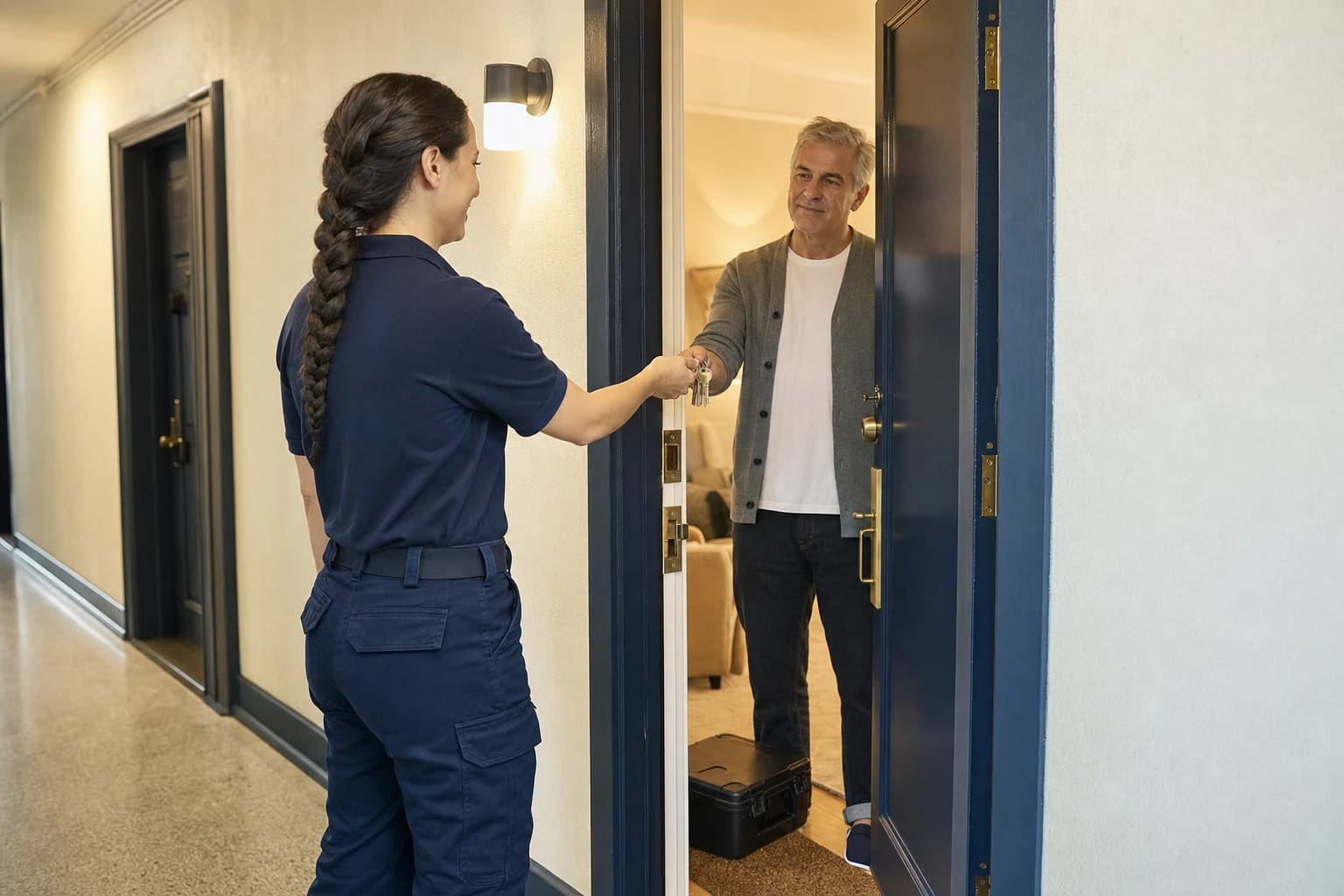
At the door
What house lockout covers
Help getting back into your home when you are locked out, with non-destructive methods tried first where the lock allows.
- A conversation about the door, the lock, and your situation before anyone is sent
- Non-destructive entry methods tried first where the lock allows
- A proof-of-residence check before entry, or as soon as the door is open if documents are inside
ID and proof you may access the property are checked before any work.
House Lockout in OhioSources
Public records and references this page draws on. They are outside USA Locksmith Pros and open in a new tab.
- U.S. Census Bureau ACS 2024 1-year via Census Reporter, Year built, units in structure and tenure (B25034, B25024, B25003)api.censusreporter.org (external site, opens in a new tab)
- University District, Columbus (Wikipedia)en.wikipedia.org (external site, opens in a new tab)
- Short North (Wikipedia)en.wikipedia.org (external site, opens in a new tab)
- NOAA NCICS State Climate Summaries, Ohiostatesummaries.ncics.org (external site, opens in a new tab)
- Ohio Revised Code 5321.15, Acts of landlord prohibitedcodes.ohio.gov (external site, opens in a new tab)